Lab-Grown vs Natural Diamond: An Honest Comparison
04.08.2026 · Rauno Oidram
A lab-grown diamond is physically and chemically identical to a natural one — the same carbon, the same 10/10 hardness on the Mohs scale, the same fire. No eye and no loupe can tell them apart — that takes laboratory instruments. The difference is in two things: price (a lab-grown diamond costs a fraction at the same size) and value retention (natural holds value better; lab resale prices are lower and falling). We sell both, so we have no reason to flatter either.

Where they are the same
- Same crystal structure, hardness and optics — the sparkle and brilliance are identical.
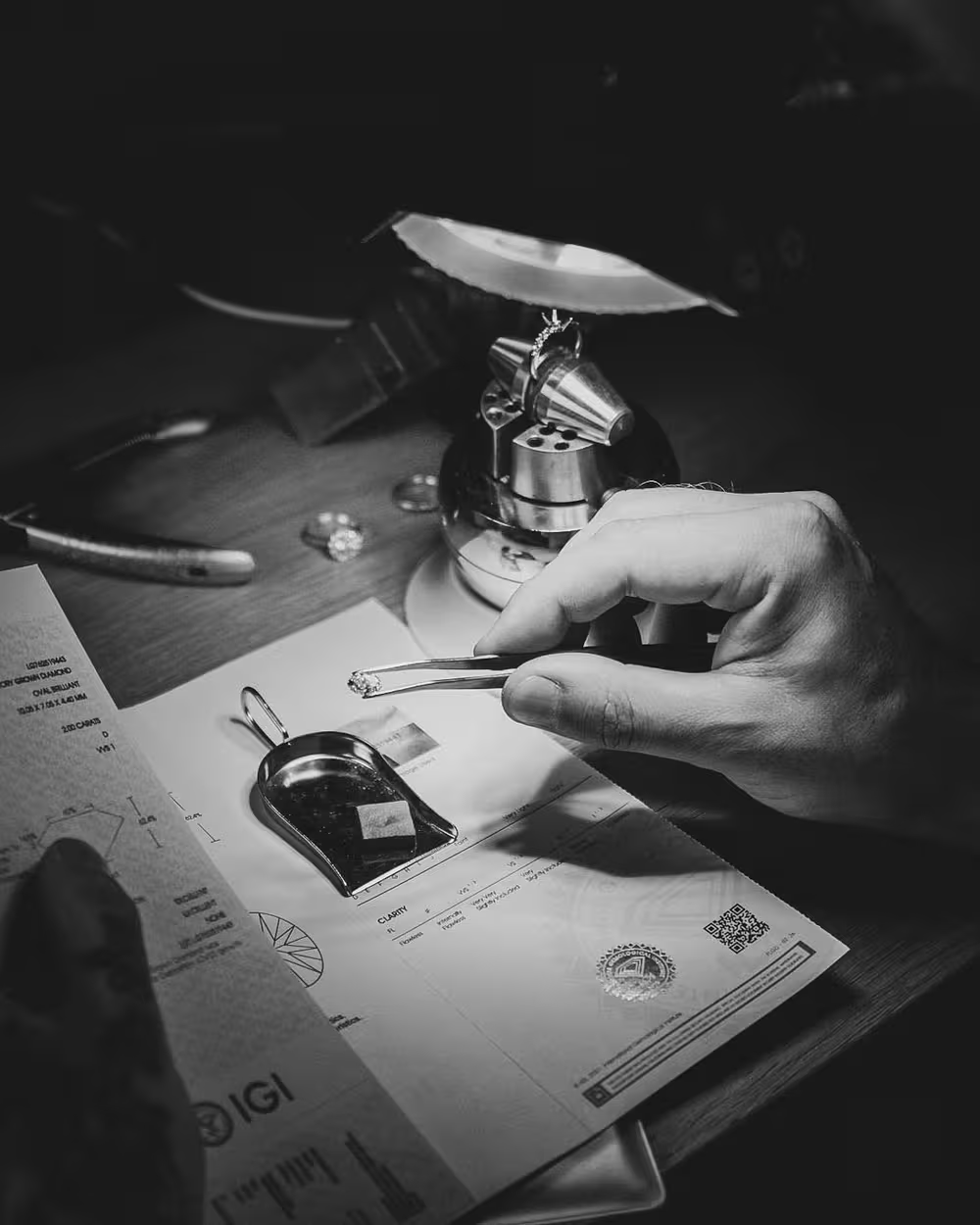
- Both are graded on the same parameters — a GIA or IGI certificate.
- Both last generations and take daily wear equally.
Where they differ
- Price: in Estonia a handmade engagement ring with a lab-grown stone typically costs €1,200–4,000. A ring with a natural stone of the same size class costs €10,000–20,000.
- Value retention: here we are blunt, because many shops will not print this sentence: a lab-grown diamond does not hold value the way a natural one does. Production keeps getting cheaper and the resale market is thin. Buy a lab-grown stone for its beauty, not as a future investment.
- Rarity and story: a natural diamond is billions of years old and there are only so many of them. For some people that is a value in itself, for others it is not — both views are right.
The comparison in one table
| Property | Lab-grown | Natural |
|---|---|---|
| Composition and hardness | Identical: pure carbon, hardness 10/10 | |
| Fire and appearance | Identical — no difference by eye or loupe | |
| Origin | A lab, in weeks | The earth, over billions of years |
| Price at Keefirivunts (ring) | mostly 1,200–4,000 € | mostly 10,000–20,000 € |
| The same budget buys | a 2–3× larger stone | rarity and a story |
| Value retention | resale prices are low and falling | holds value better |
| Certificate | GIA or IGI on the same 4C scales; origin always stated | |
Which to choose?
Choose lab-grown if you want a larger, brighter stone for the same money and holding financial value is not your argument. Choose natural if rarity, story and stored value are part of what you want. That is roughly how it falls among our clients — most choose lab-grown on the budget. The others, who choose natural, do it knowingly and for a reason.
Read next: Lab-grown vs natural · Diamonds and the 4Cs: How to Choose the Right Stone · Where diamonds and gold actually come from — the certificates that mean something
Frequently asked
Is a lab-grown diamond a real diamond?
Yes. It is chemically and physically identical to a natural diamond — same carbon, same hardness, same fire. Only the birthplace differs — a lab, not the earth.
Does a lab-grown diamond hold its value?
Honestly, not the way a natural one does. Production costs keep falling and there is effectively no resale market. Choose a lab-grown stone for its beauty, its size and its cleaner origin — not as an investment.
Can anyone tell the stone is lab-grown?
No. Not by eye, not by loupe — telling them apart takes laboratory equipment. The origin is always stated plainly on the certificate.

Rauno Oidram — goldsmith, Keefirivunts
Designs the Keefirivunts rings and personally chooses every stone.