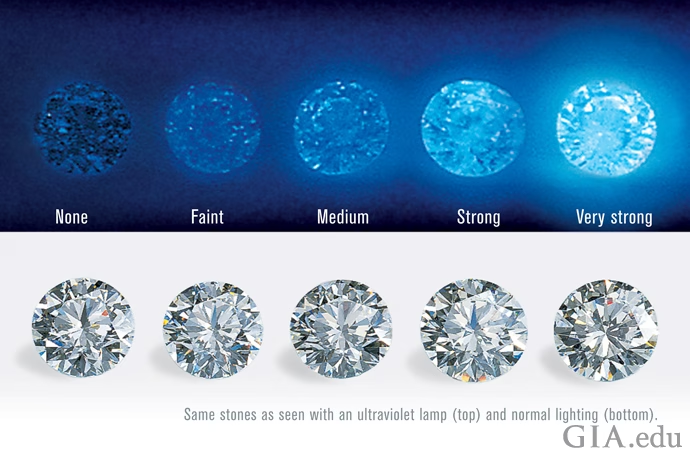
Diamond Fluorescence: Myths, Facts
If you’re looking for the ideal diamond engagement ring (or any diamond jewelry), sooner or later you’ll run into the term: diamond fluorescence. For some sellers it’s a red flag, for others it’s an opportunity to get a bigger diamond for less. The truth is in the middle: fluorescence is a real phenomenon, but its impact depends on the diamond’s color, the strength of the fluorescence, and—most importantly—how the stone looks in real-life lighting.
What fluorescence is, what myths surround it, how it can affect a diamond’s look and price, and when you should be cautious vs when it can actually be an advantage.
Quick Summary
Fluorescence means a diamond may “glow” under UV light (most commonly bluish).
Most diamonds do not fluoresce. According to GIA, in a study of 26,000+ diamonds submitted for grading, roughly 25–35% showed some degree of fluorescence under a standard long-wave UV lamp.
Fluorescence is not a reliable “at-home test” to tell natural diamonds from lab-grown diamonds.
Strong blue fluorescence does not automatically make a diamond bad. In most cases the effect is small or none; the risk of a milky/hazy appearance is rare and is typically linked to other structural issues that fluorescence can sometimes amplify.
What Is Diamond Fluorescence?
Fluorescence is a phenomenon where a material emits visible light after being stimulated (often by UV radiation). In diamonds, this means the stone can show a visible glow under UV light.
In practical terms, this means one thing for you:
in normal lighting, the diamond can look completely “normal”
in lighting with a UV component (strong sunlight, a UV lamp, some club lights), you may see a bluish glow (or more rarely another color)
On certificates, fluorescence is typically noted by intensity (for example None / Faint / Medium / Strong / Very Strong).
How Common Is Fluorescence Really?
A common belief is that all diamonds fluoresce to some degree—but that’s not true.
GIA information and the datasets they discuss suggest that about 25–35% of diamonds show some degree of fluorescence when examined under a standard long-wave UV lamp.
So: a fluorescent diamond isn’t something you see every day—but it’s not rare either.
Common Myths and Facts
Myth 1: All diamonds fluoresce
Fact: Most diamonds do not fluoresce.
Myth 2: Fluorescence is visible all the time
Fact: Fluorescence appears mainly under UV radiation and disappears when the UV source is removed.
Myth 3: Strong blue fluorescence is always bad
Fact: GIA discussions and studies show that in most cases the effect is small. In some cases, blue fluorescence can even make a slightly warmer diamond look visually whiter in certain lighting. Negative milkiness/haziness is rare and is usually linked to other defects.
Myth 4: You can reliably tell natural vs lab-grown by fluorescence
Fact: Fluorescence is not a reliable DIY test. Lab-grown diamonds can fluoresce, and natural diamonds can be completely inert. Labs use multiple methods to determine origin—not fluorescence alone.
How Does Fluorescence Affect a Diamond’s Appearance?
The simplest way to think about it: do you see an effect—or not?
In most cases: the effect is minimal
The majority of fluorescent diamonds look completely normal in everyday lighting. If the cut is good and the stone is clean, fluorescence usually doesn’t affect the diamond’s appearance.
Rare case: a hazy/milky look
In the trade, people sometimes talk about “overblue” diamonds that can look oily or hazy in certain light. Modern GIA findings emphasize that fluorescence does not cause haziness by itself; rather, haziness is typically caused by other structural characteristics or nano-inclusions—which fluorescence can sometimes make more noticeable.
Practical conclusion: don’t decide based on the label—look at the specific stone in different lighting.
How Does Fluorescence Affect Price and Value?
There have been periods when fluorescent diamonds were priced lower because of fear of haziness. Today, the market tends to evaluate fluorescence based on the specific diamond’s overall characteristics.
General logic:
Faint–Medium fluorescence: often very little impact; sometimes you can get a “better deal” because some buyers avoid it automatically.
Strong–Very Strong: may affect price more, because the risk of an “unusual appearance” is higher (still rare), and market preferences are more cautious.
Important: if a diamond is genuinely beautiful, clear, and sparkly, fluorescence alone does not make it a bad stone.
Should I Buy a Diamond with Fluorescence?
There isn’t one absolute right or wrong here—only what fits your goal.
Fluorescence can be a great option if
you want a better 4C combination for the same budget and you’re willing to actually evaluate the diamond
you’re looking for a smart deal where market preferences sometimes create better value
the fluorescence is faint to medium and the stone looks clear and lively in normal light
Prefer to avoid—or check very carefully—if
fluorescence is Strong or Very Strong and you haven’t seen the stone in multiple lighting conditions
the diamond is a very high color grade (D–F) and you want maximum “crystal-clear” feel in every situation
you notice even slight haziness or cloudiness in direct sunlight
How to Make a Safe Decision (Simple Checklist)
View the diamond in at least two lights: normal indoor light and daylight
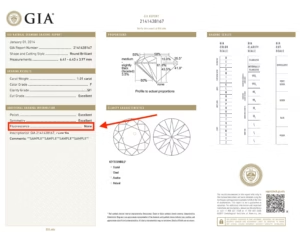
Ask for the certificate and check the fluorescence strength listed
If possible, view the stone under UV (just out of curiosity)
Most important: if the diamond feels “lifeless,” the reason is often cut or transparency—not fluorescence
Summary
Diamond fluorescence is one detail among many. For some it’s an automatic no; for others it’s a way to get a beautiful stone at a better price. The best decision happens when you don’t choose based on a myth—you evaluate the actual diamond and understand what the certificate is telling you.
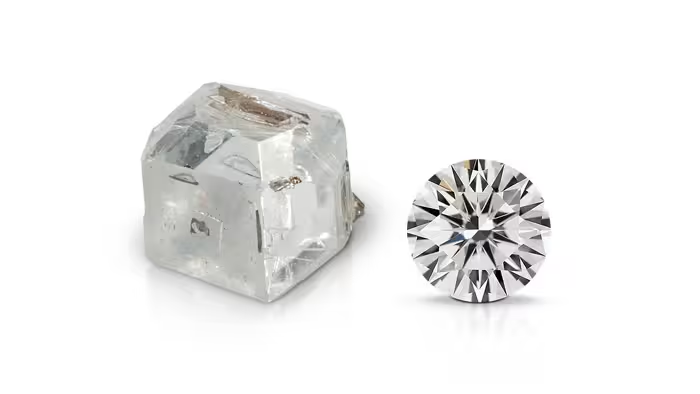
What Is a Lab-Grown Diamond—and Is It a “Real” Diamond?
Over the last six months, I’ve been getting more and more detailed questions about lab diamonds (lab-grown diamonds). I’ll try to make this topic as clear and simple as possible: what they are, how they’re made, the difference between HPHT and CVD, and when a lab-grown diamond is the best choice for you.
Quick Summary
A lab-grown diamond is a real diamond – it has the same chemical composition and optical properties as a mined diamond; the difference is the origin.
Lab-grown diamonds are mainly produced in two ways: HPHT and CVD.
It’s not a rule that HPHT is always better than CVD or vice versa – both methods can produce very high-quality stones; differences show up more in typical “fingerprints” (tone, inclusions, structure).
Lab-grown diamonds are often more affordable and for many people a more ethical choice, but it’s important to understand that market value and resale behavior can be different compared to natural stones.
What Is a Lab-Grown Diamond?
A lab-grown diamond is a diamond created in a controlled environment using technological processes that mimic natural diamond formation. In nature, diamonds form under extreme pressure and heat over very long periods of time, while in a lab a crystal can grow in weeks or months (depending on the method and the desired result).
Important: a lab-grown diamond is not cubic zirconia or glass—it is a diamond, with the same physical and optical properties as a natural diamond.
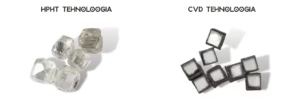
How Are Lab Diamonds Made?
1) HPHT (High Pressure High Temperature)
The HPHT method uses very high pressure and temperature to simulate the conditions under which diamonds form in nature. In a reactor, the diamond is grown larger on a “seed” crystal.
What to know (practically):
HPHT is used both to grow diamonds and sometimes (in certain cases) to improve color.
Some HPHT stones can show specific growth features or micro-traces related to metallic catalysts (which labs can identify).
2) CVD (Chemical Vapor Deposition)
In CVD, the diamond grows from a gas mixture (a carbon-containing gas). In an activated environment, carbon deposits layer by layer onto a diamond seed and forms a crystal. Generally, it requires less pressure/heat than HPHT.
What to know (practically):
CVD stones can sometimes show tones (e.g., slightly grayish/brownish) or growth-related structures, which can be improved through treatment and careful selection.
HPHT vs CVD: Which One Is Better?
It’s important to correct a common misconception here: there is no universal rule that HPHT is always higher quality and CVD is always lower quality—or the other way around.
Today, both methods produce very high-quality diamonds, and the final result depends on:
the producer’s standards,
how the crystal grew,
any post-growth processes,
and (most importantly) the specific stone’s 4Cs + certificate.
Practical advice: don’t choose based on the HPHT/CVD label—choose based on the specific stone (certificate + video + measurements + 4Cs).
Why Do People Choose Lab-Grown Diamonds?
1) A bigger or higher-quality stone for the same budget
With the same budget, you can often get:
a higher carat weight,
better color/clarity,
or both at once.
2) Ethical and more transparent production
For many people, this choice is about reducing the risks associated with mining (including conflict issues and working conditions). If this topic matters to you, it pairs well with reading your “blood diamonds” article (and supply-chain topics in general).
3) Look and sparkle
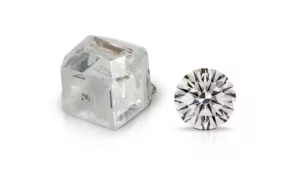
With a good cut, a lab-grown diamond sparkles the same as a natural diamond—because the optical properties are the same.
What Are the Downsides or Question Marks?
1) “Romance” and “mystique”
For some people, the natural diamond story—“from the earth, millions of years old”—matters emotionally. You can’t talk someone out of that with technical arguments. It depends on taste and personal values.
2) Resale market and value retention
Lab-grown diamond pricing has been more dynamic, and resale behavior differs from natural diamonds (which also aren’t a “quick investment”). If long-term value retention matters to you beyond emotional value, it’s worth factoring this in consciously.
3) Energy use and environmental footprint
Lab production requires energy. If environmental impact is your main argument, what becomes important is where and how the diamond was produced (energy mix, producer standards). (It’s reasonable to ask the seller directly.)
How to Make a Confident Choice (A Simple Decision Framework)
Choose a lab-grown diamond if:
you want maximum value for your budget,
you want a larger stone or higher quality,
you prefer a modern and often more transparent option.
Choose a natural diamond if:
tradition and the “nature” narrative are important to you,
you want the classic choice people have historically selected most often.
And in both cases:
don’t decide based only on “carat,”
Cut is king,
always ask for a certificate (GIA/IGI, etc.) and actually view the stone (photo/video).
Summary
A lab-grown diamond is a real diamond—the difference is origin. HPHT and CVD are the two main production methods, and today both can produce very beautiful, high-quality stones. In the end, the right choice is the one that fits your:
budget,
values,
and the meaning you want your engagement ring to carry.
Blood Diamonds: What They Are—and How to Make a More Ethical Diamond Choice
You’ve probably heard the term “blood diamonds” (also called conflict diamonds). Many people ask: are these literally “bloody” or red-colored diamonds?
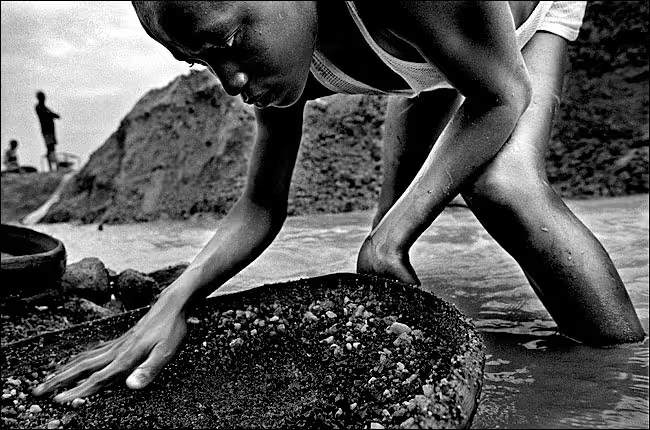
No. They are not called that because of their color. In most cases, they look like completely normal diamonds. The name comes from the fact that parts of diamond mining and trade have historically (and in some places even today) been linked to funding armed conflicts and to severe human rights abuses.
The goal of this article is not to accuse anyone or to “ruin” an existing piece of jewelry. On the contrary: the more we understand the topic, the better choices we can make.
Quick Summary
A blood diamond generally refers to diamonds whose sale is connected to financing conflicts.
The Kimberley Process (KP/KPCS) was created to reduce this problem, but its definition is narrow and does not cover all human-rights issues.
If you want a more ethical choice: ask for documentation, prefer transparent supply chains, and consider lab-grown diamonds or other alternatives.
What Are “Blood Diamonds,” and Why Did This Topic Become a Big Issue?
The concept of blood diamonds (or conflict diamonds) became widely known because diamonds have been used to finance armed conflicts—diamonds are small, valuable, and easy to transport.
Historically, the issue has been especially visible in certain regions where armed groups or corrupt networks have used mined stones to generate income and purchase weapons.
An important nuance: today, the question is not only whether a stone funded rebels, but often more broadly about supply chain transparency, working conditions, and human rights. This bigger picture is why some organizations consider existing mechanisms insufficient.

The Kimberley Process: What Is It, and What Does It Actually Cover?
One of the best-known systems created to fight blood diamonds is the Kimberley Process Certification Scheme (KPCS), launched in 2003. Its goal is to limit the movement of conflict diamonds in international trade.
Here’s the key detail: the KP definition of “conflict diamonds” mainly focuses on rough diamonds used by rebels (or their allies) to fund conflict, with the aim of undermining legitimate governments.
Why isn’t that always enough?
The KP/KPCS has been criticized because:
its definition is narrow (it doesn’t cover all human-rights abuses, especially when the situation doesn’t fit the “rebels vs government” framework)
the system relies heavily on internal country controls, and in practice there can be gaps
This doesn’t mean the KP is useless—rather it means the KP shouldn’t be the only thing you rely on when making an ethical choice.
How to Better Avoid Blood Diamonds (and Unethical Supply Chains in General)
The reality is that it’s hard to promise a 100% guarantee when the supply chain is long and a stone has changed owners/countries multiple times. But there are absolutely choices that reduce risk and increase transparency.
1) Ask for documents and origin information
diamond certificate + certificate number
the seller’s explanation of which channel the stone comes from
if they claim “conflict-free,” ask what that means in their case (KP? another standard?)
2) Prefer companies with broader responsibility standards
For example, the Responsible Jewellery Council (RJC) Code of Practices aims to improve responsible practices across the jewelry supply chain (including human rights and environmental topics). For RJC members, COP certification follows an auditing-based approach.
3) Consider a lab-grown diamond
A lab-grown diamond:
avoids conflict risks associated with mining
is still a real diamond
is often more affordable (with the same budget you can get better quality and/or a larger stone)
If your goal is maximum transparency + value for your budget, it can be a great option.
4) Alternatives: vintage/recycled and moissanite
Vintage/recycled (already in circulation) stones and jewelry can be an ethically simpler choice because you’re not supporting new mining.
Moissanite is a popular alternative and often offers a very strong price-to-performance ratio.
If You Already Have a Natural Diamond, Should You Worry?
You don’t need to feel guilty. Many people received their ring as a gift, an inheritance, or bought it at a time when they didn’t know about this topic. The most sensible and respectful approach is:
value your jewelry and wear it
take good care of it and have the settings checked from time to time
if you ever choose a new stone/piece in the future, you’ll choose more consciously
Movie Recommendation (If You Want More Emotional Context)
A feature film connected to this topic is “Blood Diamond” (2006)

Summary
“Blood diamonds” are not red diamonds—they are stones whose supply chain may be linked to conflicts and serious ethical problems. The Kimberley Process helped historically reduce the issue, but its framework is narrow, and today there is growing focus on broader responsibility and transparency.
If you want to make a conscious choice:
ask for documents
prefer transparent supply chains and strong standards
consider lab-grown diamonds or alternatives
How to Take Care of Your Engagement Ring
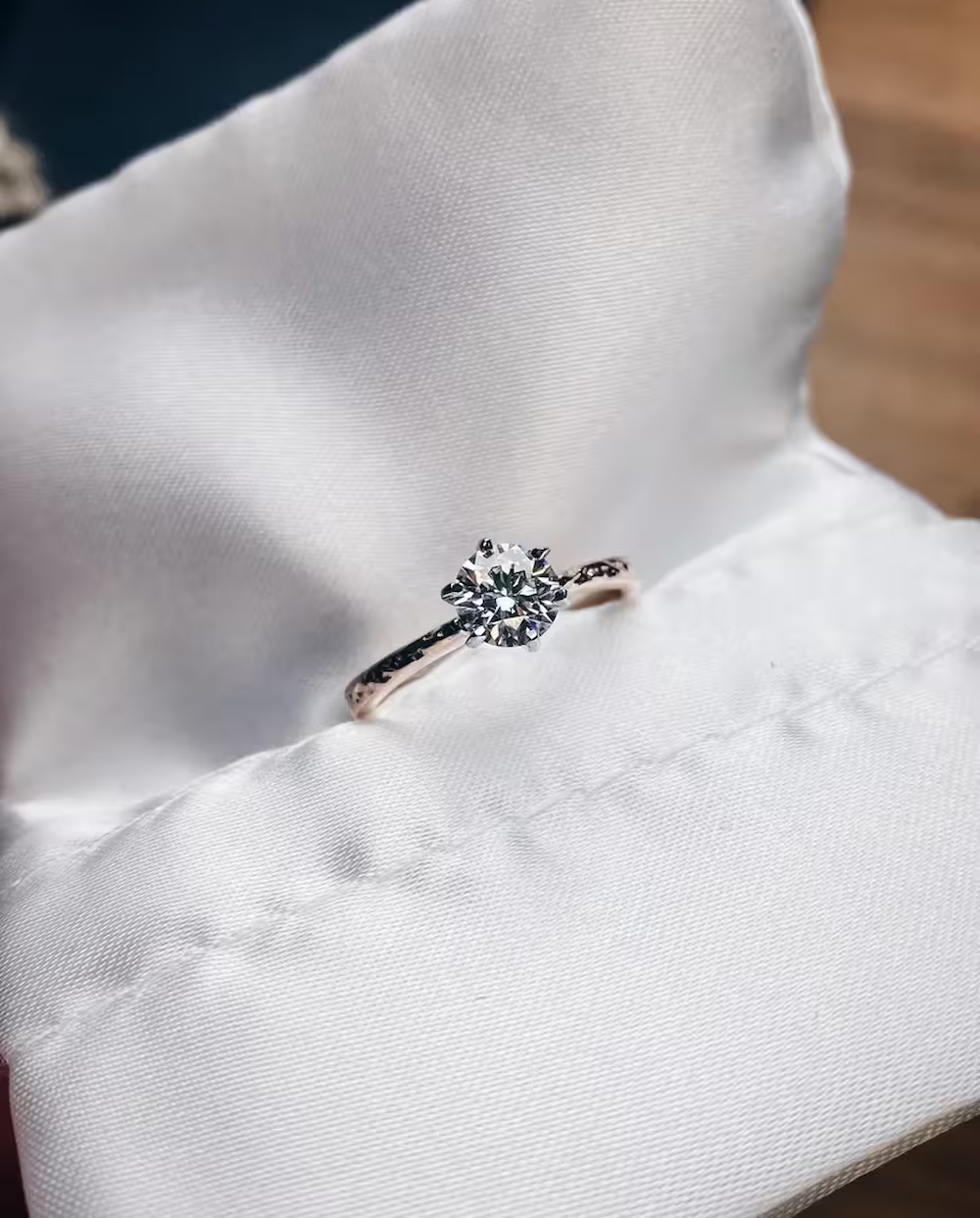
An engagement ring is jewelry that’s typically worn every day—and that’s exactly why it needs mindful care. This beautiful (and often expensive) gift is something you naturally want to keep sparkling even years later.
Below are simple, practical care tips that actually work. Most “my diamond has gone dull” concerns don’t mean there’s anything wrong with the stone at all—the cause is usually much simpler: a film of oils has built up under and around the stone from creams, soap, and your skin’s natural oils. The good news is that this problem can usually be fixed at home.
Quick Summary
Clean your ring regularly (for example once a month).
Avoid creams, chemicals, and perfume—put your ring on last and take it off first.
Store your ring separately from other jewelry (diamonds scratch others, and others scratch gold).
Avoid contact with hard/abrasive surfaces (sand, concrete, metal).
If the stone feels loose or something seems off, a jeweler check is cheaper than a lost stone.
1) Clean your engagement ring regularly (the easiest way to bring back the “wow”)
Clean your engagement ring about once every month or two.
At-home cleaning:
warm water
a small drop of mild soap or dishwashing liquid
a soft brush (for example a very soft makeup brush)
rinse and dry with a soft cloth
Avoid:
harsh chemicals
stiff brushes
“quick fixes” that can damage the surface
The toothpaste myth
There’s a trend/myth that you should clean jewelry with toothpaste and a toothbrush. Yes—it can remove grime, but toothpaste often contains abrasive particles that can scratch the surface (especially gold and silver). A toothbrush can also create micro-scratches and isn’t ideal for detailed areas.
If you want a simple rule: soapy water + a soft brush are your best friends—and they work extremely well.
2) Take your ring off when applying creams and doing cleaning
When you wash your hands, use creams, or use household chemicals, it’s smart to remove the ring for a moment.
Hand cream and a dull diamond
Hand creams contain oils and moisturizing ingredients. These build up around the stones—especially underneath—creating a film that reduces sparkle and transparency.
In my experience, 99% of “my diamond has gone dull” messages are connected to an oily layer under the stone (creams, soaps, natural skin oils, etc.). And almost always, after a proper cleaning people are happy again, because the diamond sparkles in full glory.
Household chemicals and gloves
Household cleaners can dull the surface and make the ring look rougher. Some gloves can also create friction or keep chemicals pressed against the ring longer.
Practical rule:
If you’re about to use cream/chemicals/perfume—take the ring off.
3) Store your engagement ring separately from other jewelry
One of the most common mistakes is throwing all jewelry into one box in a pile.
Why is that bad?
metals and stones have different hardness
diamonds (and moissanite) can scratch other jewelry and stones
gold is softer and scratches more easily—making it look dull faster
Best solution:
its own soft-lined box or separate pouch
a small zip jewelry pouch for travel
a small smooth tray
4) Avoid contact with hard surfaces
Even though a diamond is hard, an engagement ring isn’t indestructible. The problem isn’t the stone—the problem is the metal and the setting.
Hard surfaces that quietly cause damage:
sandy surfaces
concrete (especially modern “rough” countertops)
metal surfaces, tools, gym machines
One wrong lean on a table or one abrasive contact can create micro-scratches (or bigger ones). Over time this makes the surface look more dull.
5) Get a jeweler check-up from time to time
If the ring is bent, the sparkle doesn’t come back, or the setting keeps catching on things, it’s worth getting it checked.
Definitely get it checked if:
the stone feels even slightly loose or wobbly
the ring keeps snagging on clothing
the ring took a hard hit
the stone still doesn’t look the same even after home cleaning
Settings can fatigue slightly over time, and if a stone falls out, it becomes a much more expensive problem. Classic rule: better safe than sorry.
The most important rule: last on, first off
Put your ring on last and take it off first.
This simple habit reduces contact with:
creams
perfumes
chemicals
hair products and makeup
And when you take your ring off, always put it in its box (not on the edge of the sink or “just here for a second”).
Summary
Engagement ring care doesn’t have to be complicated. If you:
clean it regularly,
avoid creams/chemicals,
store it separately,
and do occasional check-ups,
then it will stay sparkling and beautiful for years.
5 Situations When You Shouldn’t Wear Your Engagement Ring
An engagement ring is a symbol of love and commitment—but it’s also a piece of jewelry that lives in the middle of your everyday life. And everyday life can honestly be pretty tough: creams, chemicals, impacts, cold-hot temperature changes, chlorine in water, workouts, household chores.
So here are 5 situations where temporarily taking off your engagement ring is a practical decision that helps keep both the stone and the metal looking beautiful, the settings secure, and the ring safe overall. I’ll also add a few tips on how to do it so the ring doesn’t get lost.
Quick Summary
If you want your engagement ring to stay just as beautiful for decades:
take it off before makeup/creams, sleep, workouts, swimming, cleaning
always keep your ring in one dedicated place (not here-and-there)
have it checked and cleaned occasionally
1) When doing makeup and applying creams
Makeup products and creams contain oils, silicones, and pigments that can build up around stones and inside settings over time. The result is that the diamond (or other stone) looks dull, because light can’t reflect properly anymore.
Why does it matter?
a diamond gets its sparkle from light—if there’s a dull film around the stone, the ring looks less brilliant
cream residue tends to collect especially under the stone and on the sides
Practical rule:
If you’re doing makeup or applying hand cream, take the ring off for a moment and put it somewhere safe.
2) While sleeping
This surprises many people, but an engagement ring can take more wear at night than during the day.
At night:
hands move and press into positions that can bend or twist the ring
the setting can snag on pillows/blankets/hair
if the setting takes a hit or gets twisted, the stone can start to wiggle (and in the worst case, fall out)
Why does it matter?
a slight looseness isn’t always immediate danger, but it’s a signal the setting needs a check
especially important with larger stones or higher-profile settings
Practical rule:
If you don’t want to worry about it, take your ring off at night.
3) When working out
Workouts and engagement rings don’t mix for two reasons: impact risk and safety.
At the gym:
dumbbells, barbells, machines, and plates can deform the ring
the ring can snag on something (risk to your finger)
hands can swell during training—your ring may start to pinch, or later slip off more easily
Why does it matter?
gold is relatively soft compared to steel—micro-damage can happen
workouts also create more sweat and dirt that can build up in the setting
Practical rule:
Take your ring off for workouts. If you still want to wear a symbol, some couples choose a simple “placeholder” ring for training.
4) When swimming (pool and sea)
Swimming is one of the biggest risks for a ring—loss and wear.
in cold water, fingers can shrink and the ring can slip off
chlorine in pool water and salt in the sea can affect metal and finishing over time
Why does it matter?
most lost rings are lost in water—and you usually don’t even notice when it happened
if a ring is lost in the sea or a lake, it’s often gone forever
Practical rule:
Don’t wear your ring while swimming. Put it somewhere dry and safe.
5) When cleaning and washing dishes
Household chores are surprisingly aggressive for an engagement ring:
cleaners and chemicals can affect the metal finish
gloves and cloths can catch on prongs
when washing dishes in the sink, there’s a real risk the ring slips off or gets hit against pots/pans
Why does it matter?
cleaning is one of the most common sources of micro-scratches and dullness
dirt builds up under the stone and makes it look dull faster
chemicals can react with metal and weaken it over time
Practical rule:
Before cleaning, take your ring off—and always put it in the same place.
How to make sure your ring doesn’t get lost when you take it off
The biggest risk isn’t taking your ring off—it’s placing it “somewhere” and forgetting it.
Here are simple rules that actually work:
One fixed spot at home: a small box/bowl/tray in a consistent place (for example in the bedroom).
One fixed spot when you’re out: a small zip pocket or a jewelry box in your bag.
Never place your ring on the edge of the sink.
Don’t put your ring in an open pocket where it can fall out.
When should you get the ring checked?
If you want your ring to last 50+ years, think of it like a car: from time to time it needs an inspection.
A check-up is smart if:
the stone feels even slightly loose
the ring took a hard hit
the ring often snags on things
the sparkle is gone (often it’s simply a cleaning issue)
Summary
An engagement ring is a priceless symbol—and the best way to protect it is to know when wearing it isn’t practical. If you take it off temporarily while doing makeup, sleeping, working out, swimming, and cleaning, it will stay for longer:
brighter
more beautiful
- more secure
and the risk of something happening is lower
A Quality Engagement Ring Isn’t Just an Expense
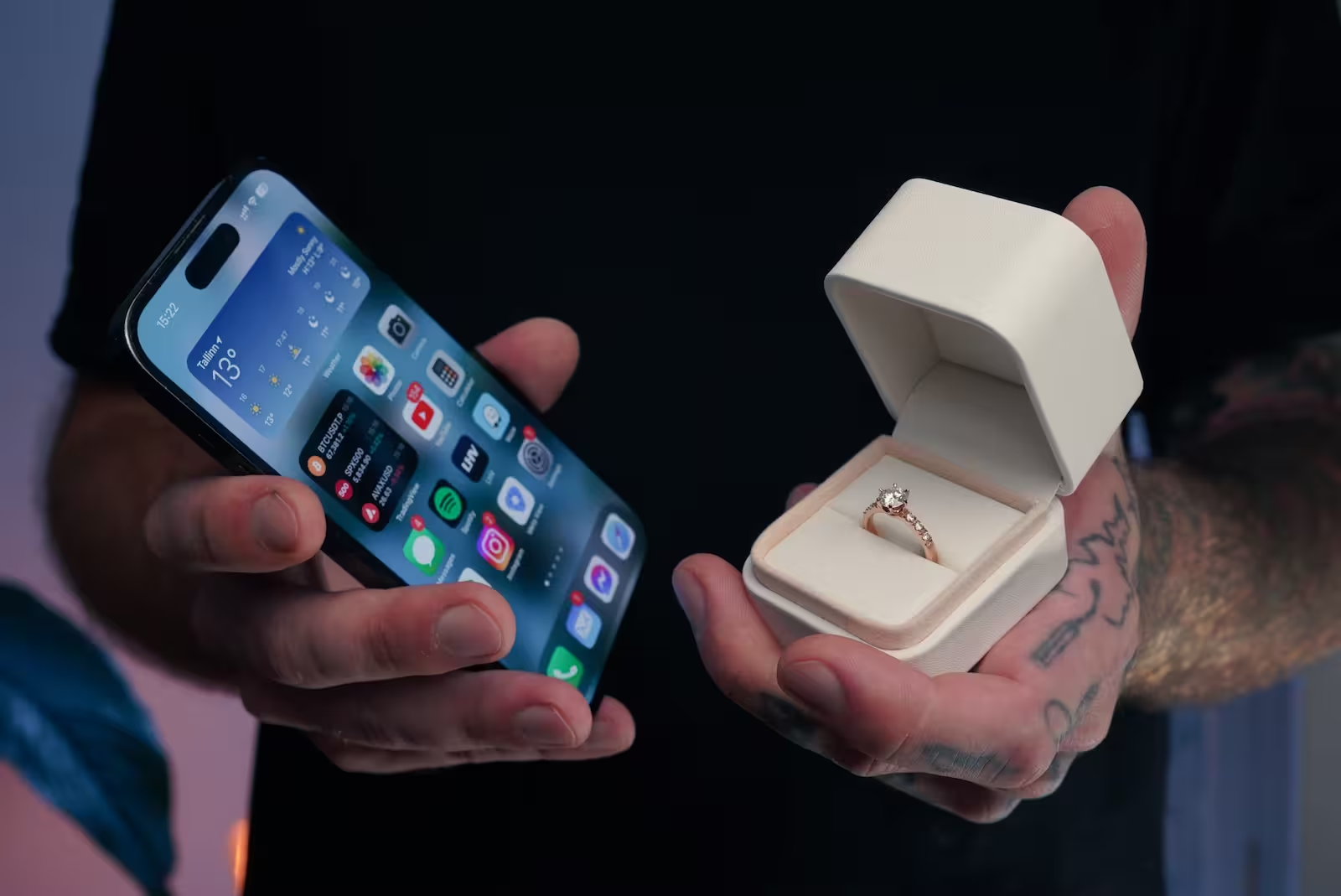
I thought I’d talk for a moment about value and money. Ironically, I’m writing this text on my iPhone, which cost about €1500—and I’ll most likely replace it with a new one in a couple of years.
But an engagement ring? It’s a symbol that’s often worn every day for 50+ years. And this is where many men can shift their thinking from “cost” to “value”—because the real price of an engagement ring isn’t just the number on the invoice, but what that ring means in daily life.
Why an Engagement Ring Feels “Expensive” (But Actually Isn’t)
Many men compare an engagement ring to short-term purchases: a phone, tech, car accessories. These are things that:
wear out quickly,
lose value,
need to be replaced.
An engagement ring is the opposite:
it’s in everyday use for decades,
it’s timeless,
its meaning grows over time.
Engagement Ring vs iPhone — Which One Is Actually “More Expensive”?
Let’s put it into a simple comparison.
iPhone
Price: €1500
Use: 2–3 years
Daily cost:
If used for 2 years: 1500 € / (2 × 365) ≈ €2.05 / day
If used for 3 years: 1500 € / (3 × 365) ≈ €1.37 / day
Engagement ring
Let’s take a diamond engagement ring priced around €3000–€5000 and assume it’s worn for 50 years.
Daily cost:
3000 € / (50 × 365) ≈ €0.16 / day
4000 € / (50 × 365) ≈ €0.22 / day
5000 € / (50 × 365) ≈ €0.27 / day
So even if the engagement ring is a bigger number at the moment of purchase, its cost per day becomes surprisingly small—and unlike a phone, the ring doesn’t become outdated and doesn’t need a full upgrade every few years.
What Makes an Engagement Ring an “Investment”?
An important clarification: an engagement ring isn’t an investment in the sense that you buy it and sell it for profit. It’s an investment in the sense that you’re buying something that:
lasts a lifetime,
is a daily symbol,
carries your story,
and grows in emotional value over the years.
You don’t buy an engagement ring every day. Hopefully, you buy it once in your life—and that’s exactly why it’s worth choosing a high-quality, timeless, well-made piece.
Final Thought
If a phone is just a tool, an engagement ring is value.
If a phone becomes outdated, an engagement ring only becomes more meaningful over time.
Choose an engagement ring that is as timeless and valuable as your relationship.
Gold Price: Then & Now
It’s pretty incredible that I’ve been making jewelry for almost 10 years now. Through sleepless nights and countless hours chasing tiny details, I’ve put a lot of heart and dedication into every piece—so that each one would be special and meaningful.
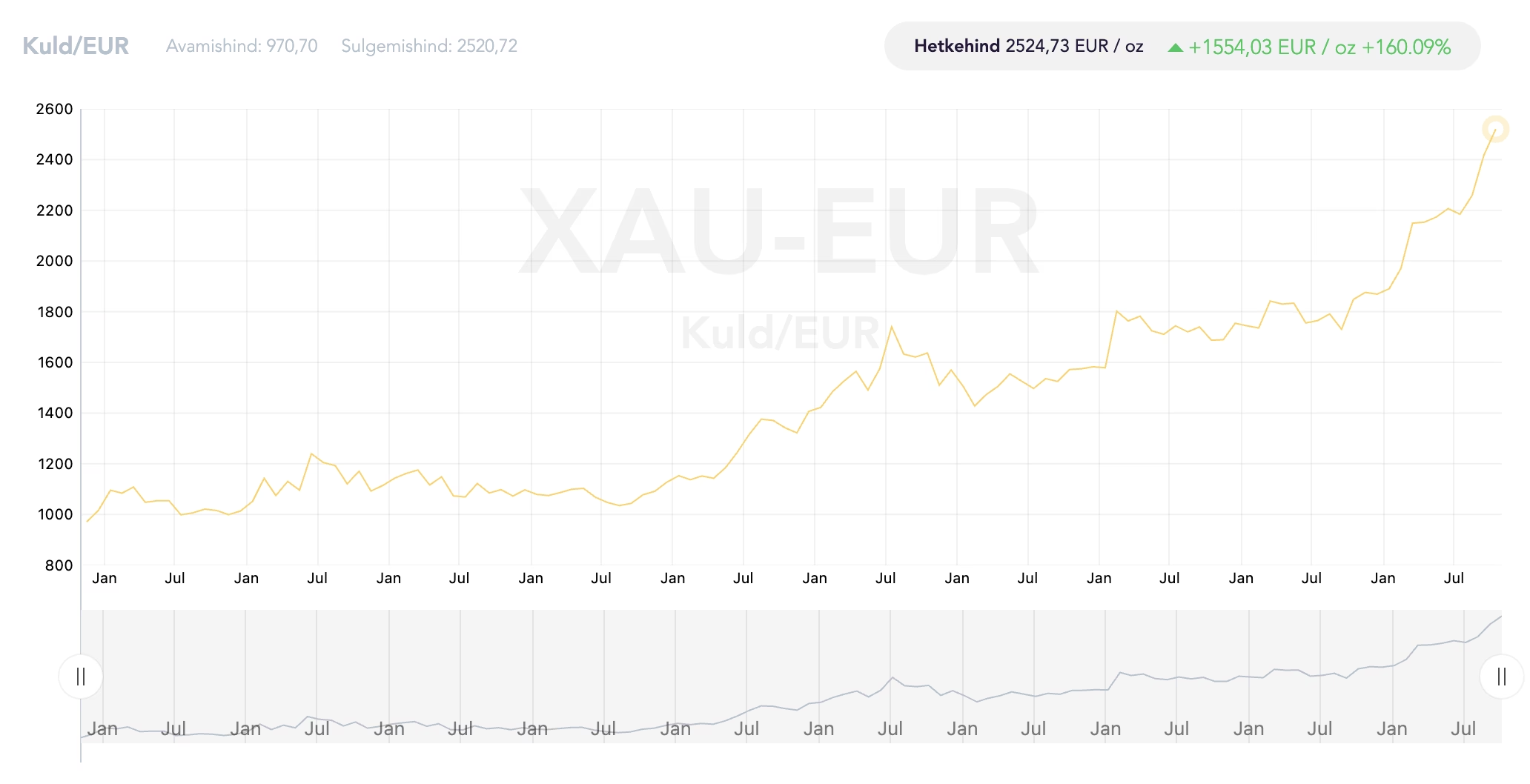
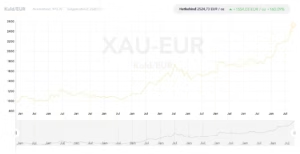
At the same time, the price of gold has made a wild leap as well, and by today (February 24, 2026) it has reached a level that would have been hard to imagine 10 years ago.
Quick Summary
The price of gold in euros has multiplied over the last 10+ years.
I’ve tried to slow down price increases and have absorbed part of the rising costs myself, but with the current price rally, changes are unavoidable.
If you already have a ring in mind, then honestly, right now is one of the best times to place your order.
Gold price: then and now
When I started making jewelry, the price of gold per ounce in euros was very different.
A quick reference point:
In 2014, the price of gold per ounce in euros was most often around €930–€975
Today (24.02.2026), the price of gold in Europe is approximately €4,390 / oz (24K).
That’s a huge jump. And gold isn’t the only thing—other costs (labor, energy, supply chain, tools, services) have also risen steadily.
Why does this affect the pricing of engagement rings and gold rings?
Keefirivunts jewelry is made here in Estonia—from design to finishing. It doesn’t come from a production line, and it’s not cheap mass manufacturing. It’s handcraft, where:
materials have a real market price (and it changes quickly),
the work is precise and time-consuming,
and I have no intention of cutting corners on quality.
For years I’ve tried to hold back price increases and absorbed rising costs myself—material costs and wages. But with today’s prices, the honest answer is: a price increase is inevitable.
What’s next? (Pricing changes)
The reality is that due to rising material and other costs—and my unwavering commitment to quality—there will be changes to pricing in the new year.
How much exactly? It’s impossible to lock it 100% today, because material prices keep moving.
But the direction is clear: with today’s input costs, keeping the old pricing is not realistic.
I know this can feel discouraging—and I truly understand that. That’s exactly why I wanted to give a heads-up early. If you’ve been eyeing a ring or thinking about ordering, now is a good time to finalize your order. This isn’t a sales trick—just an honest description of the situation.
Why is a handcrafted piece worth it?
A handmade piece of jewelry isn’t just an accessory. It’s:
quality that lasts,
details that stand out,
a symbol that carries a story and meaning.
Thank you for being part of this journey and for supporting a small Estonian brand that believes things should be done properly—even when it’s not always the easiest or cheapest path.
If you have questions or want to talk through your choice, feel free to reach out.
Which Diamond Should You Choose?
Choosing a diamond is one of those decisions that feels both simple and endlessly detailed at the same time. “I just want a beautiful stone” is a perfectly fine starting point—but if the goal is to find the right diamond for an engagement ring, it helps to know a few key truths. That way you avoid an unnecessarily high price tag, get better sparkle, and choose something that fits your values and budget.
What’s the real difference between natural and lab-grown diamonds, what the 4Cs mean, which shapes work best in engagement rings, and how to make a confident choice that fits you.
Quick Summary (if you’re in a hurry)
A lab-grown diamond is a real diamond — chemically, physically, and optically the same.
Cut is the most important, because it determines sparkle.
For color and clarity, aim for eye-clean and a range that matches the metal.
Carat is the visible number, but proportions and shape can create a bigger overall look even at a lower weight.
Always ask for a certificate.
Lab-grown vs natural diamond: what’s the real difference?
Let’s start with the most important question, because it always comes up: is a lab-grown diamond a “real” diamond?
Yes. Chemically, physically, and optically, it is a diamond.
What is a natural diamond?
A natural diamond formed deep in the earth under intense pressure and heat, and over time made its way closer to the surface. For many people, that natural origin is part of the romance.
Pros
Traditional choice, historically preferred, and natural
In some cases, better resale market
Cons
Often more expensive than a lab-grown diamond with the same specs
Origin and supply chain transparency can vary
What is a lab-grown diamond?
A lab-grown diamond is created in controlled conditions using a process that mimics natural diamond formation. The result is a diamond that is like a natural diamond—because it is a diamond.
Pros
With the same budget, you often get a larger or higher-quality diamond compared to natural stones
Generally easier to achieve consistent quality and clearer origin
Cons
Market pricing is more dynamic (price trends can change more over time)
Not naturally formed
Which one is better?
“Better” depends on what matters most to you.
Maximum value for your budget → lab-grown diamond
Tradition and natural origin → natural diamond
A conscious choice → both can work, but check the certificate and origin info
Diamond 4Cs: what they really mean (and what’s worth paying for)
In the diamond world you’ll hear the 4Cs: Cut, Color, Clarity, Carat. For an engagement ring diamond, one of these matters more than the others.
1) Cut (the most important for sparkle)
Cut determines how well the diamond reflects light and how brilliant it looks. Even a large and clean diamond can look dull if the cut is poor.
Recommendation for an engagement ring
Choose Excellent / Ideal if possible (depending on the grading lab)
If you need to save somewhere, don’t save on cut
2) Color
Color (typically D–Z) shows how colorless the diamond is. To the naked eye, differences between many ranges are surprisingly small—especially depending on the metal.
Practical ranges
White gold: often D–H works very well
Yellow/rose gold: you can go warmer, for example F–J, because the metal blends the tone
3) Clarity
Clarity refers to internal “features” and tiny marks. Most people want an eye-clean result: clean to the naked eye.
Recommendation
For many engagement rings, VS2–SI1 is absolutely enough (depending on cut and shape)
Don’t blindly pay for “the cleanest” if the difference is only visible under a microscope
4) Carat (weight / size)
Carat is what everyone asks about, but it’s not the whole story. Two diamonds with the same carat can look different in size depending on cut and proportions.
Tip: how to get a visually larger diamond at the same carat
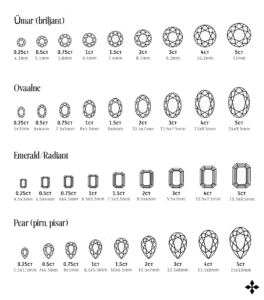
If you want a larger look without pushing the budget, play with shape and proportions (for example oval, pear).
Which shape should you choose? Popular diamond shapes for engagement rings
Diamond shape affects both style and how the stone looks on the hand.
Round (brilliant): the most classic and typically the maximum sparkle. Often also the most expensive per carat.
Oval: looks larger on the finger and visually elongates the hand.
Cushion: soft, romantic, a bit of a vintage vibe. Sparkles “softer” than round.
Emerald: minimalist and architectural. Shows clarity and color more clearly, so choose those more carefully.
Princess: sharper and modern with strong sparkle, but corners need a protective setting.
Certificate: what you must pay attention to
When choosing a diamond (natural or lab-grown), always ask for a certificate. The certificate is the diamond’s passport: it lists the 4Cs—cut, color, clarity, carat, measurements, and other details.
What to check
The certificate and certificate number
Cut grade and proportions
Measurements (not only carat)
How to choose a diamond on a budget (without compromising the result)
If your budget is limited (totally normal), choose in a way that keeps the sparkle:
Cut first
Choose eye-clean clarity
Choose color to match the metal
Only then adjust carat
Simple strategy:
choose slightly lower color/clarity, but a very strong cut—the result will be bright and beautiful.
Lab-grown diamond in an engagement ring: who is it best for?
Especially good if:
you want a larger stone with the same budget
you want maximum sparkle and quality
you value a modern and transparent choice
A natural diamond is especially good if:
tradition and natural origin matter to you
you value the classic choice
Frequently asked questions
Does a lab-grown diamond sparkle less?
No. With the same grades, it’s impossible to tell natural and lab-grown diamonds apart with the naked eye.
Is a natural diamond always a better investment?
A diamond is not a “quick investment.” An engagement ring is primarily an emotional and personal item. If investment matters to you, you need to look at specific stone categories and market conditions—not only natural vs lab.
What matters most for a ring to look expensive?
A great cut, the right proportions, a clean design, and a setting that lets light work with the stone.
Summary: which diamond should you choose?
If you want a simple decision:
maximum sparkle and value for your budget → choose a lab-grown diamond and focus on cut
tradition and natural origin → choose a natural diamond, and still focus on cut
either way: Cut is king (cut determines whether the diamond sparkles)
How Much Does an Engagement Ring Cost?
An engagement ring is one of the few things in life you buy with the expectation that it will be worn for a lifetime. That’s why it’s completely natural that one of the first questions is: how much does an engagement ring actually cost?
The short answer: prices can vary a lot. In Estonia, engagement rings often start around €800 and can go up to several thousand euros.
What makes up the price of an engagement ring.
Quick Summary
The biggest drivers of engagement ring price are usually the diamond, the metal, and the work/design.
The largest price factor is typically the diamond (especially carat weight).
A lab-grown diamond gives you a stone with the same look and composition for significantly less.
The “2–3 months’ salary” rule is no longer a standard—it’s smarter to choose based on your own budget and lifestyle.
What makes up the price of an engagement ring?
The price of an engagement ring doesn’t depend only on diamond size. Most often, it’s driven by three main factors:
Diamond
Precious metal
Workmanship and design
Together, these determine whether a ring costs €1000 or €10,000+.
The diamond: the biggest price driver
The largest share of an engagement ring’s price usually comes from the diamond. Diamond value is graded by four characteristics (the 4Cs):
Carat (weight)
Cut (cut quality)
Color (color grade)
Clarity (clarity)
Why is carat such a big deal?
The price curve is steep here: the bigger the stone, the faster the price grows. At the same time, the visible difference doesn’t always grow as fast as the price. That’s why a slightly smaller—but well-chosen—stone can be the best choice for many people.
Lab-grown diamond
In recent years, lab-grown diamonds have become very popular in Estonia. They are chemically and visually identical to natural diamonds, but often significantly more affordable. It’s one of the simplest ways to keep the same “wow effect” within budget.
The metal: gold, white gold (and why it matters)
The second price component is the material. The most common choices are:
gold
white gold
platinum
Gold price depends on purity (for example 585 / 14K or 750 / 18K). Platinum is generally the most expensive and durable, but Keefirivunts does not offer it yet.
Handcraft and design: the difference between “just a ring” and “your ring”
The third big factor is workmanship. Mass-produced rings are cheaper, but a custom or handcrafted ring includes:
precision (setting, proportions)
time (finishing, checks, details)
a level of quality that mass production often can’t replicate
This is where the ring’s character is created: details, balance, and finishing that stand out even when someone can’t explain why the ring looks better.
How big should your engagement ring budget be?
People often ask whether the “2–3 months’ salary” rule applies. Today, it’s no longer a reliable standard.
It’s much smarter to base your decision on:
what you can comfortably afford
your partner’s style and lifestyle
whether you prefer a larger stone or higher quality (cut/clarity/color)
whether you choose a lab-grown or natural diamond
More important than price is that the ring is:
comfortable for everyday wear
high-quality and durable
truly worthy of your story
Final word
The price of an engagement ring mainly depends on the diamond’s characteristics, the metal, and the design/work.
If you’re just starting out, it’s worth taking a moment to look at your options calmly—choosing becomes simple when you know what matters most to you.
How to Measure Ring Size Secretly?
If an engagement ring purchase falls apart for one reason, it’s often this one: “I don’t know her ring size.” That’s a completely normal fear—because choosing the wrong size feels like a big risk.
Good news: you can estimate ring size surprisingly well in secret, and even if it isn’t 100% perfect, there are simple solutions (temporary adjusters, resizing later, etc.). The most important thing is that the ring fits on her finger in that important moment.
Based on Keefirivunts experience, a useful reference point is: the average engagement ring size is usually around 16.5–17.5 mm (inner diameter).
Quick Summary (if you’re in a hurry)
If you’re between two sizes: choose slightly bigger.
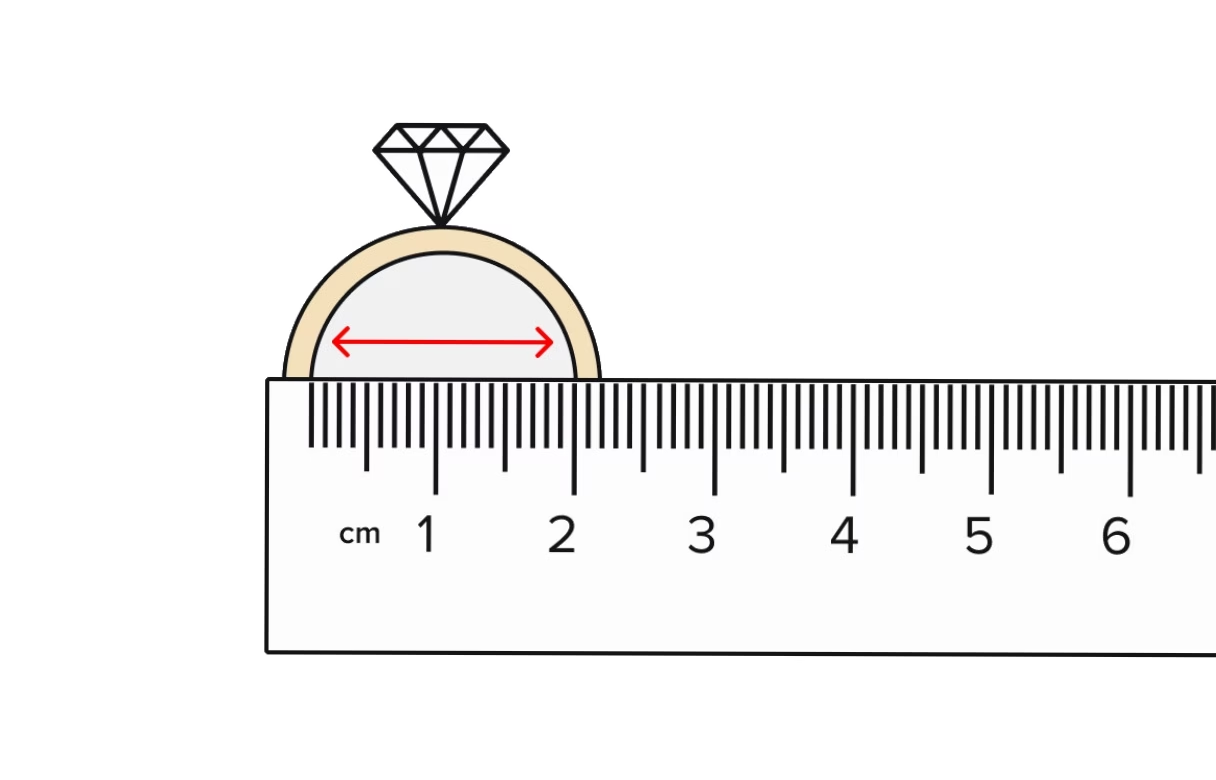
If you can get one of her rings: measure the inner diameter (mm) or trace the inner circle on paper.
If you have no idea at all: 16.5–17.5 mm (EU 52–55) is very often a safe range.
If after the proposal the size isn’t ideal: a temporary adjuster + resizing later is completely normal.
What does “16.5–17.5 mm” actually mean?
Ring size can be measured in different systems. The easiest is to think in terms of diameter (inner diameter in mm).
Approximate equivalents:
16.5 mm diameter ≈ EU 52
17.3 mm diameter ≈ EU 54
17.5 mm diameter ≈ EU 55
The average ring size, by our current estimate, is usually around EU 52–55 (depending on the person, hand shape, and which finger the ring is worn on).
The most important rule for a surprise purchase: slightly bigger is safer
If you’re choosing between two options and you’re not sure, go slightly bigger.
Why?
In the important moment, the key is that the ring goes on the finger.
If the ring is slightly big, you can immediately secure it temporarily (clear adjuster, ring guard, other simple solutions).
Resizing later is common for most classic gold rings.
If the ring is too small, it can slightly spoil the moment.
6 proven ways to secretly find her ring size
1) “Borrow” one of her rings (the best method)
If she has a ring she wears on the same finger (or at least on the same hand), this is the best option.
How to do it:
Take the ring briefly (for example during a shower, workout, or while she’s sleeping).
Measure the inner diameter with a ruler or calipers (mm).
Or trace the ring’s inner circle on paper (see next point).
Note: for accuracy, measure the inner circle, not the outer edge.
2) Paper tracing: inner circle + measuring
If you can grab the ring but don’t really have tools:
Place the ring on paper
Trace the inner circle with a pencil
Measure the widest point of the circle (diameter in mm)
This can be surprisingly accurate if you trace carefully.
3) Take the ring to a jeweler
If you can keep the ring a bit longer:
Go to a jeweler or goldsmith
Ask them to quickly measure it with a ring sizer
This is very accurate and simple.
4) Use a “spy”: friend / sister / mother
The most elegant option:
Someone close to her casually asks her ring size
Or takes her to a shop “for fun” to try rings on
Bonus: you don’t have to borrow or measure anything yourself.
5) Measure while she’s sleeping (backup plan)
This only works if it’s realistic and safe:
Wrap a strip of paper or string around her finger
Mark the overlap point
Measure the length and compare it to a size chart
Important: string/paper can introduce error (too tight or too loose), so treat this as a backup method.
6) Compare it to your own finger (emergency tip)
Put the ring on your own finger and see where it stops:
Notice roughly where it fits
From there you can estimate a size range
Not the most accurate, but it gives you direction.
When to measure? Small details that make a big difference
Fingers change depending on time of day and temperature:
In the morning, fingers can be smaller; in the evening, larger.
In cold weather, fingers can shrink slightly; in warmth, they can swell a bit.
That’s why for a surprise purchase it’s completely okay to choose a size that leaves some room.
If you don’t know the size at all: the safest choice (based on Keefirivunts experience)
If you have to choose completely “blind,” very often this works:
16.5–17.5 mm inner diameter
which is about EU 52–55
“But what if it’s wrong?” What to do after the proposal
If the ring is slightly big
A clear ring size adjuster helps immediately so the ring doesn’t spin or slip off.
A jeweler can also add small helper solutions that keep the ring more stable.
If it needs a proper resize
Resizing is common, and many rings can be resized (depending on design and setting). In general, it’s often possible to adjust a couple of sizes up or down, but it always depends on the specific ring.
