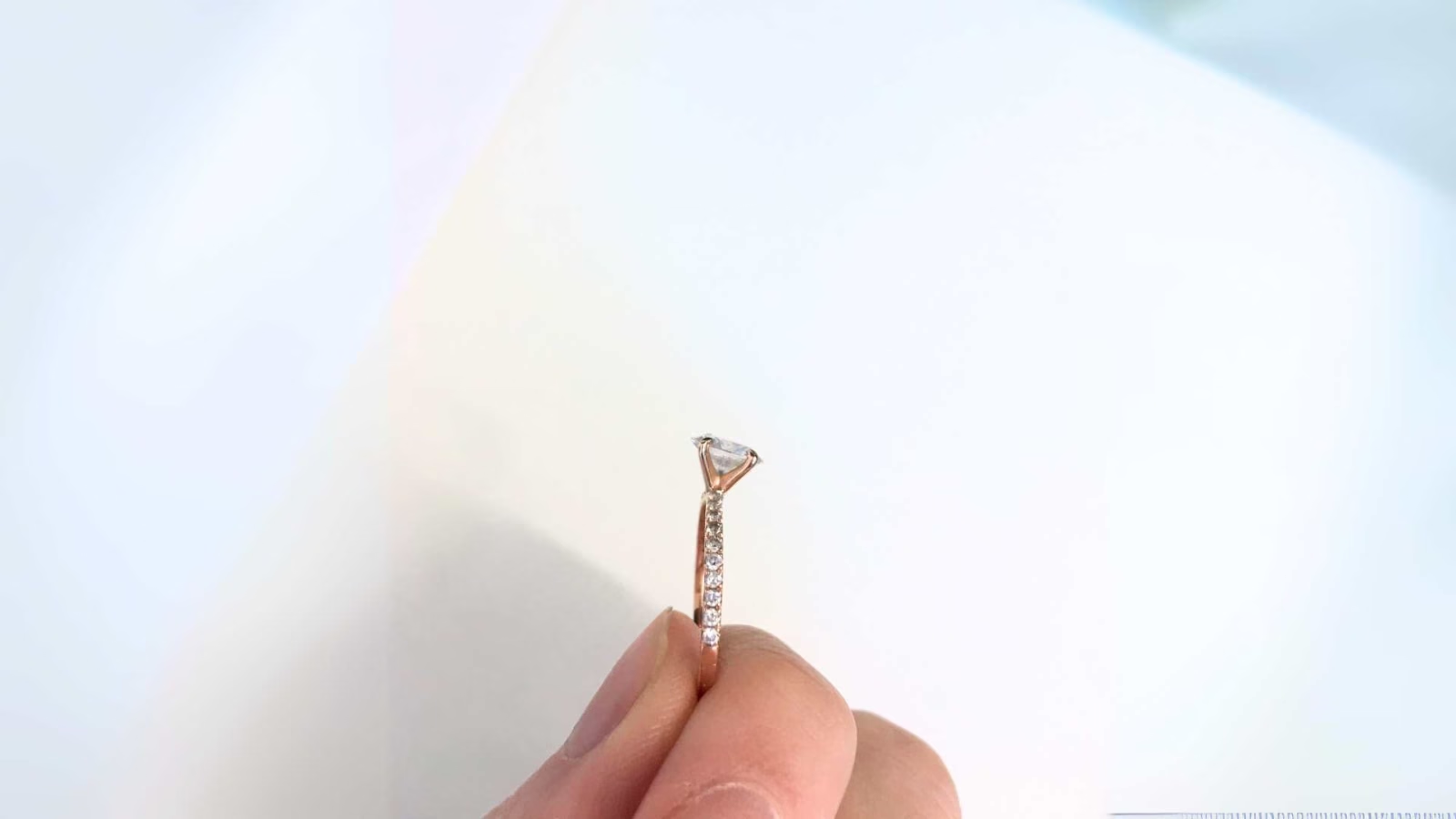
Why Avoid a Thin Engagement Ring
Thin engagement rings are popular because they look minimalist and delicately feminine. But an engagement ring is a piece of jewelry that is often worn every day—ideally for decades. That’s why it’s worth thinking through the risks that come with wearing especially thin ring designs, particularly when the ring has a larger center stone or a row of stones.
Below is a clear overview of why a ring that’s too thin can cause problems over time, and what a practical “safe” range looks like.
 Quick Summary
- A ring that’s too thin bends and deforms more easily.
- Over the years, the metal wears down and the ring can become even more fragile.
- Resizing is more limited with a thin band and can weaken the ring even further.
- With stone-set rings, the risk increases that the settings fatigue and the stones start to wiggle or fall out.
- Recommendation for everyday wear: min 1.8–2.0 mm, depending on the stone and the design.
1) Higher Risk of Damage
Very thin engagement rings are naturally more delicate. They are more susceptible to:
- bending,
- deforming,
- and sometimes even breaking.
Everyday things—carrying a heavy bag, accidentally hitting your hand against a hard surface, the gym, tools, door frames—can affect a thin ring over time.
Why does this happen?
Gold is a soft metal. If the band is too thin, then:
- it gives way more easily,
- it can stretch,
- or it may lose its round shape over time.
2) Long-Term Durability
An engagement (and marriage) is meant to last a lifetime—so ideally an engagement ring should too. But thin rings may not hold up as well over many years.
Over time:
- the metal wears down,
- micro-scratches and friction affect the material,
- and the band can become even thinner than it was originally.
That’s why a ring with a stronger construction is often a better choice—not only for safety, but also so the ring still looks good after 10–20 years.
3) Limited Resizing Options
Life changes, and sometimes finger size changes too. The problem with a thin ring is that there may be less room for adjustment.
Additionally, every resize typically involves refinishing (filing/polishing), which can make the ring microscopically thinner—especially if it’s done multiple times over a lifetime.
A thicker band = more “margin” for the future.
4) Risk of Losing Stones
If the ring has a stone (or a row of stones), a thin band is especially risky.
Stones need support:
- prongs (settings) must remain strong,
- the band must be stable,
- and the setting shouldn’t “fatigue” from daily micro-impacts.
If the band bends, that stress transfers into the stone setting. Over time, the result can be:
- the stone starts to wiggle,
- prongs wear down or open microscopically,
- in the worst case, the stone can fall out.
5) Maintenance and Cleaning
A thin ring usually needs to be:
- checked more often,
- handled more carefully,
- and you need to react faster if something feels “off”.
Every small bend or scratch affects a thin ring more than a thicker band. Thicker rings:
- handle everyday life better,
- require less constant attention,
- and stay stable for longer.
Summary and Recommendation
The appeal of thin engagement rings is real—they’re minimalist and delicate. But an engagement ring is jewelry that should last for years. So it’s worth choosing a solution that combines beauty and durability.
Recommendation for everyday wear:
- at least a 1.8–2.0 mm wide band (depending on the stone size and placement)
In the end, the choice is personal, but awareness of the risks of thin rings helps you make a decision that fits the wearer’s lifestyle and lasts “forever”.
Hand-Set Diamonds vs Mass Production
Hand-Set Diamonds vs Mass Production
Where does the price difference come from—and why does it matter?
If you’re looking for an engagement ring, price and quality are usually the first things you think about. Very often, the biggest difference between seemingly similar rings comes down to how the stone is set and the overall logic behind how the piece is made.
A hand-set diamond and a machine-set diamond can look similar in photos, but in everyday wear (and years later) the difference is often clearly noticeable: setting security, finishing quality, clean details, comfort, and how long the ring keeps that “new” look.
Quick Summary
- Hand-setting means precision, customization, and quality control at every step.
- Mass production is faster and cheaper, but standardized—it doesn’t adapt to each stone’s unique characteristics in the same way.
- The price difference mainly comes from time, skill, and inspection.
- An engagement ring is worn for years—so “what’s cheaper today” is often secondary to “what lasts and still looks great later.”
What does “hand-set diamond” mean?
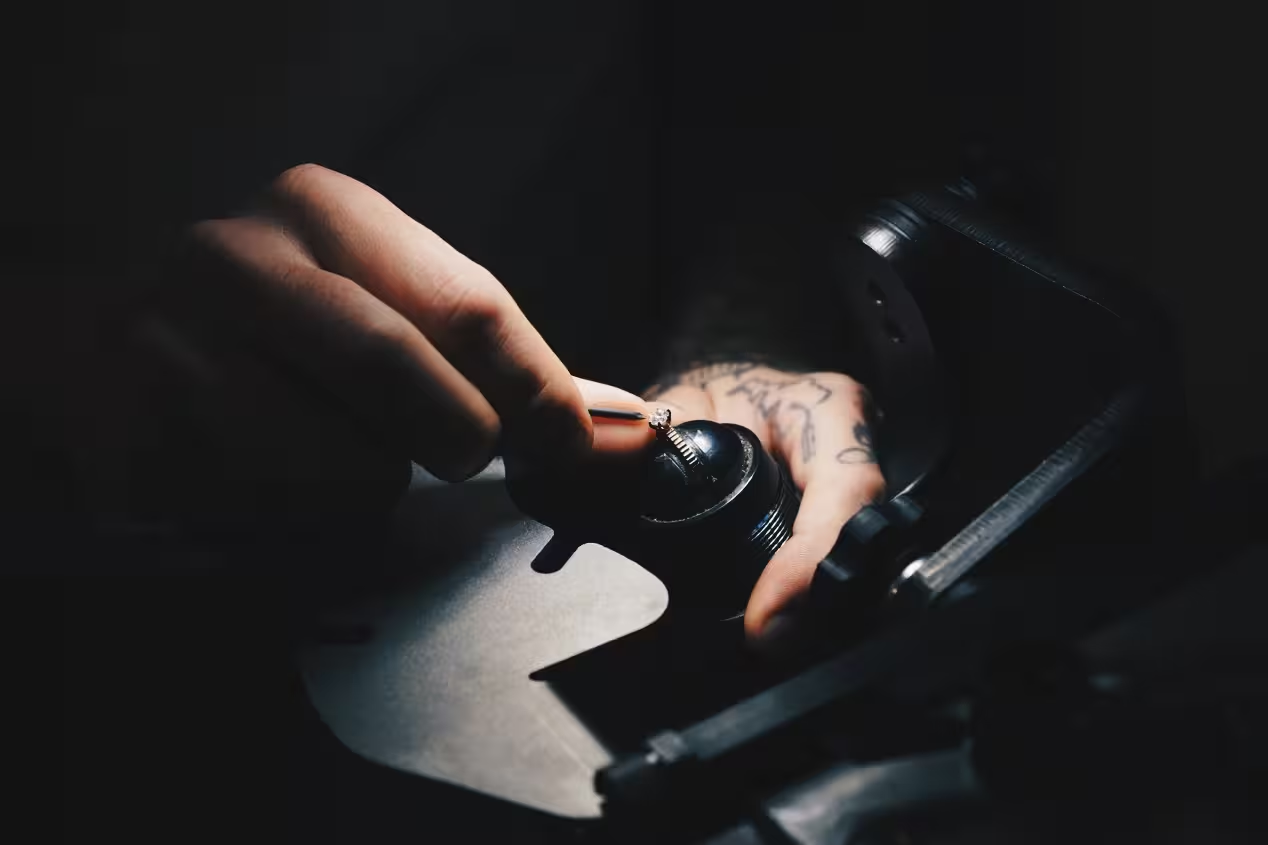
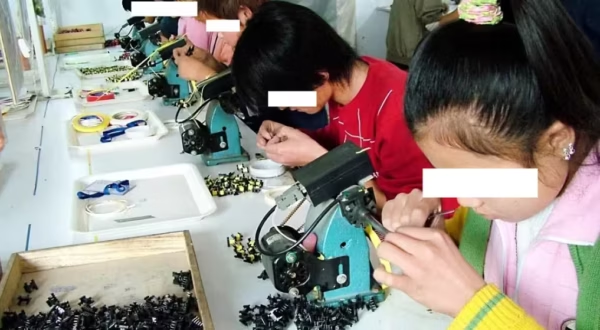
Hand-setting means a master jeweler sets the diamond by hand, adjusting the work to the specific stone and the specific ring.
At Keefirivunts, diamonds are set by hand. It’s slow, precise work that requires:
- experience and skill,
- a very sharp eye,
- micro-level finishing,
- and control to ensure the stone is secure while still looking as beautiful as possible.
Why does this matter?
Because every diamond is slightly different. Even certified stones are not “exactly identical”—they can differ in:
- micro-measurements,
- proportions,
- girdle details,
- and how the stone sits inside a specific setting or “head”.
A skilled setter can:
- shape the prongs symmetrically,
- tighten and finish them so the stone stays firmly in place,
- correct tiny imperfections,
- and create a final result that looks aesthetically clean and refined.
What is mass production and machine setting?
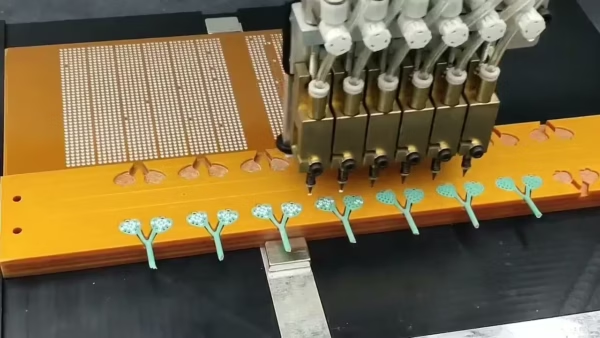
In mass production, standardized processes and equipment (including CNC, etc.) are often used to produce quickly and in high volume.
Machine setting: pros
- fast production
- lower cost price
- consistent average result
Machine setting: cons
- standardized work doesn’t adapt to each stone’s unique characteristics at the same level
- if the stone or the casting is slightly different, the final result may be less precise
- very often the goal is speed and volume, not detailed finishing
The stone may be secure—but the difference shows up in the details:
- prong shape and symmetry,
- cleanliness of the setting,
- stone alignment,
- and how thoroughly the work is checked.
Where does the price difference really come from?
The simple answer: time and skill cost money.
With handcraft, you’re paying for the fact that:
- a master jeweler truly works on your ring,
- every detail is finished properly,
- the stone setting is checked and re-checked,
- and the final result meets a standard that’s built to last for years.
In mass production, the manufacturer saves on:
- labor time,
- inspection and control,
- and often also the level of finishing.
The result may look similar at first glance, but after long-term wear the difference can show:
- more scratches and a finish that wears faster,
- a higher chance the setting needs maintenance sooner,
- and less of that “clean handcraft” feel.
Why is this especially important for an engagement ring?
An engagement ring isn’t just another purchase. You’ll most likely buy it once in your life—and it becomes an everyday piece.
The advantage of a hand-set stone is that:
- the setting is made with durability as the priority,
- the finishing is designed to look good even up close,
- and the ring is generally more comfortable to wear (balance, fit, clean details).
Handcraft and ethics: transparency matters
Beyond quality, many people also care about where and how the ring is made.
With handcraft, it’s easier to follow the production process:
- who makes it,
- where it’s made,
- and what standards are used.
That often feels more reassuring than an anonymous production chain, where a low price may come at the expense of something the customer never sees.
Summary: why choose a hand-set diamond ring?
A hand-set engagement ring is:
- more precise in its setting,
- better finished,
- safer for everyday wear,
- and made to last.
If you value quality, thoughtful details, honest craftsmanship, and timeless beauty, a hand-set diamond engagement ring is a confident choice.
How to Choose an Engagement Ring
Choosing an engagement ring is one of the most important moments in life—it symbolizes love and a shared future. If you’re a man who wants to propose (maybe as a surprise), it’s completely normal to have a hundred questions at once: what size, what design, what stone, how much it costs, and how can I be sure she’ll truly love it?
In this article, I’ll give you a practical, calm “roadmap” for choosing an engagement ring so the result feels confident and right.
Quick Summary
- Size: don’t stress—most rings can be resized later. If you’re between two sizes, choose slightly bigger.
- Design: look at what style she wears day to day (minimalist vs statement).
- Stone: if you want the diamond to sparkle, prioritize Cut.
- Budget: the “2–3 months’ salary” rule doesn’t apply—choose based on what you can comfortably afford.
- Most important: choose a ring that’s comfortable to wear every day, not just in photos.
1) How to Find Your Partner’s Ring Size?
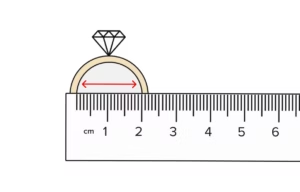
Ring size feels like the biggest stumbling block for many people—especially if you want it to be a surprise. Luckily, there are several good options.
1) Borrow one of her rings (the most reliable)
If she has a ring she wears on the correct finger, then:
- borrow it briefly (for example during a shower, workout, or while she’s sleeping)
- take it to a goldsmith/jeweler to be measured
Small tip: don’t borrow the ring she wears every day—otherwise you risk the “where is my ring?” situation.
2) Involve a friend / sister / mother
This is the most elegant “spy” option:
- someone close to her casually asks her ring size
- or takes her to try on rings as a joke
3) Go try on rings together
If the topic of engagement is already on the table, this is actually a very good solution:
- you’ll get the exact size
- you’ll confirm the exact style
- and it becomes a nice shared memory
Important: even if the size isn’t perfect, you can usually resize the ring later. So it should never be the reason you don’t buy the ring.
2) How to Choose the Engagement Ring Design?
The design is what she’ll see every day. So the question isn’t only “what’s beautiful?” but “what’s her style?”
Look at her everyday style
Ask yourself:
- does she wear more minimalist jewelry or statement pieces?
- does she like classic, modern, or vintage style?
- does she prefer white metal (white gold) or warmer tones (yellow/rose)?
Also think about practicality
If she’s active and does a lot with her hands, then:
- a low setting (a lower-set stone) is often more comfortable
- a very high stone can snag and feel “in the way”
If you’re unsure, go timeless
If you’re not 100% sure, timeless classics work almost always:
- one center stone
- a clean, balanced design
- a comfortable profile
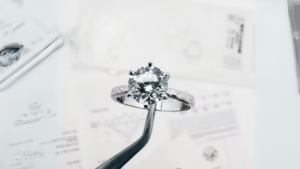
3) How to Choose the Stone? (For Diamonds: the 4Cs)
The stone choice affects both the look and the price. For diamonds, people talk about the 4Cs:
- Cut
- Clarity
- Color
- Carat
1) Cut – the most important
Cut determines whether a diamond sparkles.
If you want the stone to feel “wow,” keep the cut high: Excellent/Ideal (or at least Very Good).
2) Clarity – aim for “eye-clean”
Clarity refers to inclusions (tiny imperfections inside the stone).
A practical goal for an engagement ring: eye-clean (clean to the naked eye).
Very often, a great choice is VVS1–VS2 (depending on the shape).
3) Color – choose based on the metal
- Visually white: D–J
- Slight yellow tint: K–M
- Yellow tint: N–Z
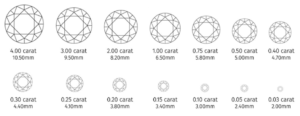
4) Carat – size, but not only
Carat is weight. The price jumps quickly as carat increases, so a smart choice can be:
- a slightly smaller carat, but better cut
- or a shape (oval/pear/marquise) that looks larger at the same carat
Natural vs lab-grown diamond
- a lab-grown diamond is a real diamond—just with a different origin
- often you can get a larger or higher-quality diamond for the same budget
- a natural diamond is the traditional choice with the “from the earth” story
4) How Much Should an Engagement Ring Cost?
Forget the “2–3 months’ salary” rule. Today, it’s smarter to choose based on:
- what fits your budget comfortably
- what matches your lifestyle
- what design stays high-quality and timeless
Many choices often fall in the €1200–€3000 range, but you can build a great ring in other ways too (for example: lab diamond, simpler design, smaller carat, better cut).
5) Quality and Trust: What to Always Check?
Before you decide:
- ask for a diamond certificate (for example GIA / IGI / HRD)
- make sure the design is durable and wearable for everyday life
- confirm whether the ring can be resized later (usually it can)
Summary
The right engagement ring isn’t the one that’s “most expensive” or “biggest.” The right engagement ring is the one that:
- matches your future fiancée’s style
- is comfortable to wear every day
- is high-quality and timeless
- and feels like the right choice to you
If you want, you can also write to me with:
- what metal she wears (white/yellow)
- what style she likes (minimal vs statement)
- and your approximate budget range
and I’ll suggest 3–5 very specific directions to move forward with.
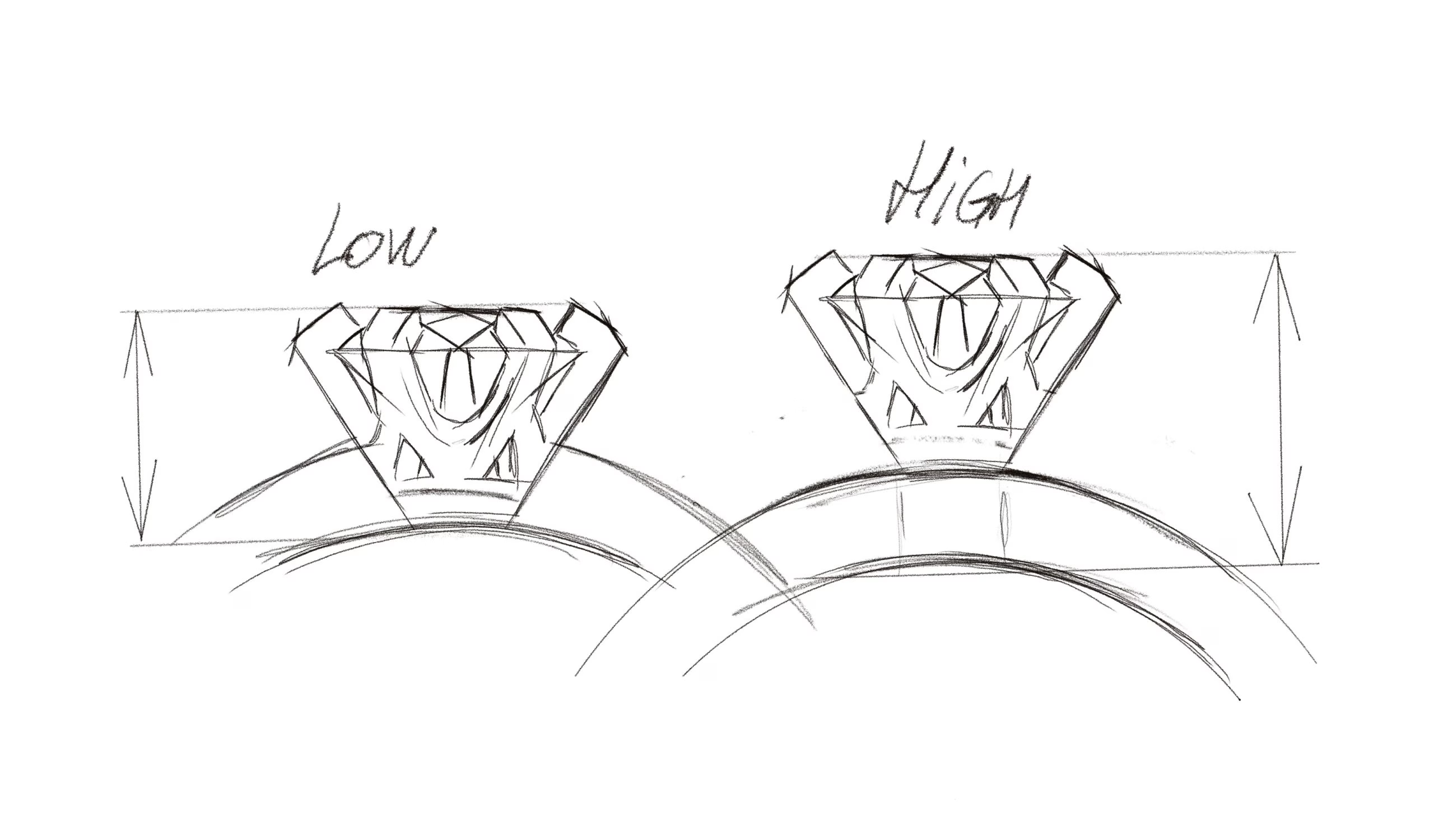
What is a Low vs High Setting on an Engagement Ring?
When choosing an engagement ring, people usually look first at the stone’s shape and size—but one detail that affects everyday life more than most expect is the setting, meaning how high the stone sits on the ring.
Simply put:
low setting = the stone sits closer to the finger, a lower profile
high setting = the stone sits higher, more elevated and emphasized
These two styles affect the ring’s look, comfort, maintenance, and security.
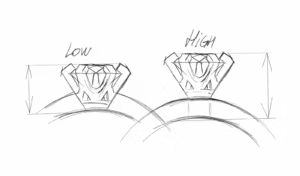
Quick Summary
Low setting is more comfortable, safer, and more practical for everyday wear.
High setting creates more of a “wow” effect and often gives the stone more light/sparkle, but it requires more caution.
If you wear your ring every day and do a lot with your hands: low is often the best choice.
If your goal is maximum visual impact and a luxurious “statement”: high setting is the right move.
What Does “Setting” Actually Mean?
Setting (the height of the stone setting) is how the stone is attached to the ring and how high it sits above the band and finger.
It affects:
how much light reaches the stone
how much the stone stands out visually
how easy the ring is to wear and maintain
how protected the stone really is
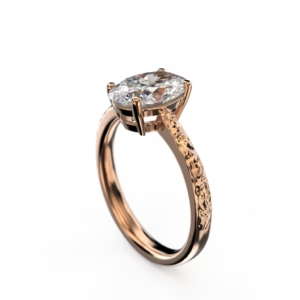
Low Setting: A Lower-Set Stone
Low setting means the stone sits as close to the finger as possible. The profile is low, and the ring feels “smoother” overall—often also more minimalist.
Pros
Everyday comfort
snags less often on hair, sweaters, or gloves
comfortable if you do a lot of hands-on work
Security
the stone is better protected because it doesn’t “stick out” as much
lower risk of hitting the stone or bending the setting
Discreet and elegant look
great for those who want a refined, classic, more subtle impression
Cons
Light access can be more limited
a lower profile can reduce how light moves around the stone (depending on the exact setting)
if your priority is maximum sparkle from every angle, high may feel more “alive”
Less room for design “play”
some very airy or “architectural” designs require height
Wedding band
a wedding band may not sit “flush” next to the engagement ring
it can be smart to choose a custom-shaped wedding band
Best for who?
an active lifestyle
those who want a low, comfortable profile
people who don’t want the ring to snag easily
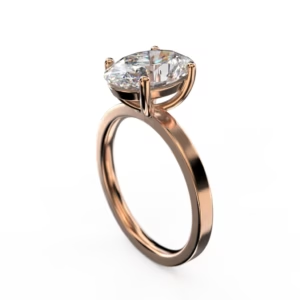
High Setting: A Higher-Set Stone
High setting means the stone is raised higher above the band and the finger, putting it more in focus. Visually, it often feels more luxurious and creates the impression of a “bigger” ring.
Pros
Maximum sparkle
light can reach the stone from more angles
the diamond can look brighter, especially with a good cut
Strong visual impact
the stone is clearly the “main character”
great for those who want an engagement ring that turns heads
More design options
more room for details: a halo, more complex prongs, “cathedral” style structures, etc.
Wedding band
you can choose almost any wedding band next to a high-set engagement ring
Cons
Practicality
snags more easily on clothing, hair, and gloves
can feel more “in the way” during everyday tasks
Higher risk of impacts
the stone sits more “out front” and is easier to hit against tables, doors, bars, concrete surfaces
the setting may fatigue more over time if the ring takes frequent micro-impacts
More frequent cleaning needed
the stone is more exposed to dirt, soap, and creams
sparkle can fade faster if you don’t clean it occasionally
Best for who?
if you want maximum “statement” impact
if you want the most visual sparkle
if you know your everyday life isn’t very “hands-on”
Which One to Choose? Simple Questions That Help You Decide
Choose low setting if:
you want it to feel “comfortable like a second skin”
you work out actively, clean, do hands-on work, or move around a lot
you don’t want the ring to snag
Choose high setting if:
you want the stone to feel instantly “wow” and stand out
maximum sparkle and visibility matter to you
you’re willing to be a bit more careful and maintain the ring more
A Small Extra: Low/High Isn’t Black and White
Many modern designs sit somewhere in between:
high enough for light to do its job
but low enough to be comfortable for everyday wear
In other words: the best setting is the one that fits your lifestyle.
Summary
Low setting gives comfort and security, high setting delivers maximum visual impact and sparkle. Both are right—the question is which one is right for you.
What Is Carat?
What Is Carat?
When talking about diamonds, one of the first questions is almost always the diamond’s weight, or carat (ct). Carat is one of the most important numbers on a diamond certificate because it affects both how the stone looks and how much it costs.
In this article, I’ll make carat simple: what carat really means, where the unit came from, how it affects a diamond’s appearance, why shape matters more than you think, and why price doesn’t increase linearly.
Quick Summary
1 carat (1.00 ct) = 0.2 g, or 200 mg.
Carat is weight, not diameter—though a higher weight usually also means a larger visual size.
Two diamonds with the same carat weight can look different because shape and cut change the visible surface area.
Price increases with carat not in a straight line, but in jumps (rarity).
A higher carat often means a taller setting and more attention to ring design.
What Is Carat?
Carat (ct) is the unit of weight used for diamonds and other gemstones.
1 ct = 200 mg = 0.2 g
Even though carat refers to the stone’s weight, it also affects visual size—because higher weight usually means larger measurements, especially with a round brilliant cut.
Where Did the Word “Carat” Come From?
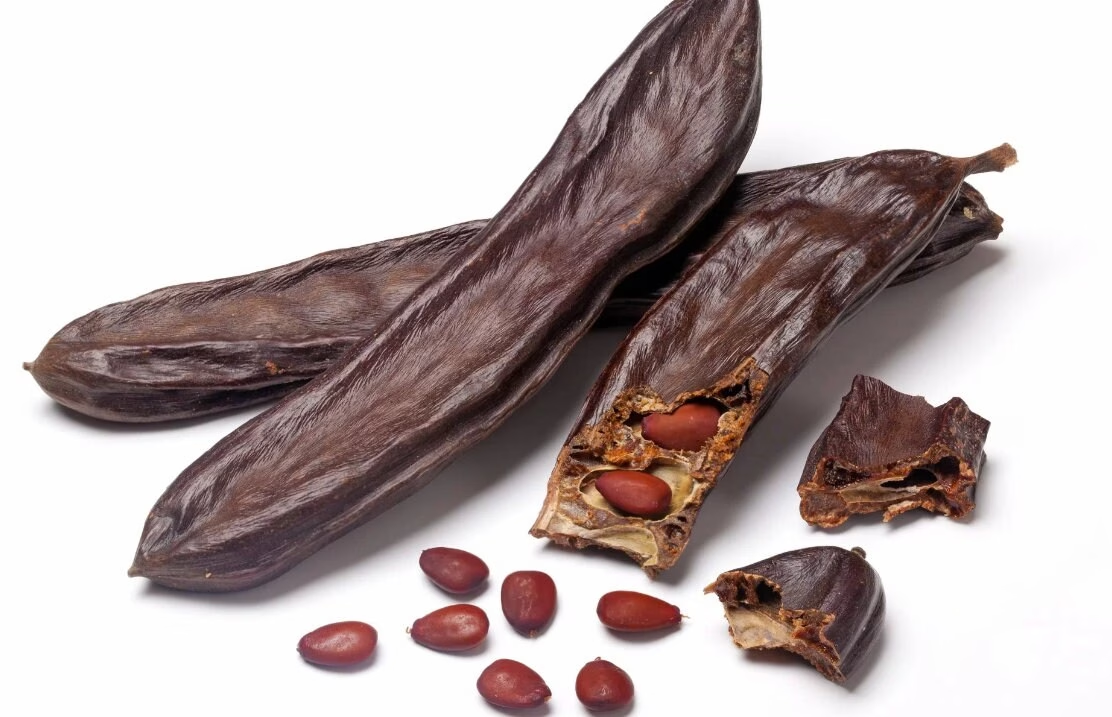
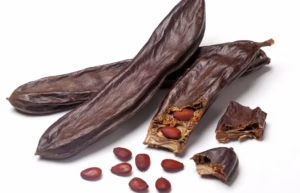
The word “carat” comes from old trading practices. Long ago, gemstones were weighed using carob tree seeds (carob tree seeds) because their mass was considered consistently the same, around 2 g. Over time this practice became a standard, and eventually “carat” was standardized into the modern unit used worldwide today.
How Carat Affects a Diamond’s Visual Size
Carat tells you how heavy the stone is, but the “size” you see also depends on how the diamond is cut and what shape it is.
In general (for a round brilliant), the higher the carat, the larger the diameter—but:
if a diamond is cut too deep, it can be “heavier” but look smaller from the top
if a diamond is cut too shallow, it can look bigger but won’t sparkle as well
- if a diamond is cut to an ideal depth, it creates beautiful sparkle
How Does Diamond Shape Change the Perceived “Size”?
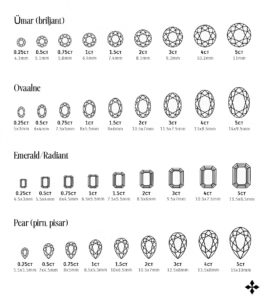
Two diamonds with the same carat weight can appear different in size depending on the shape, because the shape determines how much surface area the stone covers when viewed from the top.
Practical examples:
Oval: often looks larger and visually elongates the finger
Emerald / Radiant: longer and often lower proportions—can look larger and elongate the finger
Marquise / Pear: often look larger than their weight suggests because the shape stretches the outline
If your goal is visual size, choosing the right shape is one of the best ways to “play” with proportions.
Why Does Carat Increase Price So Quickly?
As carat increases, the price usually rises exponentially, not “proportionally.”
Why?
large diamonds are significantly rarer
even rarer is a large diamond with excellent cut, color, and clarity at the same time
certain “thresholds” (for example 1.00 ct) are psychological milestones in the market and push prices up
That’s why a 0.90 ct can sometimes be much better value than a 1.00 ct, even though the visible difference is small.
How Carat Affects Ring Design
The larger the stone, the more it affects the entire ring’s construction.
a larger diamond needs a stronger setting
the stone is often set higher (so the prongs can hold it securely)
proportions must be right: band width, stone height, overall balance
Large stones are visually very elegant and eye-catching—but precisely because of that, the design must ensure that:
it’s comfortable for everyday wear
the stone is protected
the ring doesn’t constantly snag
Summary
Carat is a simple number everyone asks about—but the best choice happens when you look at carat together with shape, cut, and proportions. The most beautiful result doesn’t always come from the “biggest” stone, but from the best-proportioned stone that fits your budget and style.
What Is Diamond “Color”?
If you’re looking for a diamond engagement ring, “color” is one of those parameters that can seem extremely important on paper… but in real life it’s often very simple: many color differences are minimal to the naked eye, and the right choice depends more on what metal the ring is made of and what your budget is.
In this article I’ll explain:
what “color” really means,
which ranges are the most sensible,
and how the metal (white vs yellow) affects what you see.
Quick Summary
Diamond “color” means how colorless (or how warm/yellowish/brownish) a diamond is.
The scale usually runs from D (most colorless) to Z (warmest/most yellow).
To the naked eye, the difference between D–F and G–J is often very small—especially with a good cut.
White gold: often best is D–G.
Yellow/rose gold: you can often go warmer, for example G–J, because the metal reflects a warmer tone through the stone anyway.
“Cut” affects how “white” a diamond appears—often more than one color grade.
What Is Diamond “Color”?
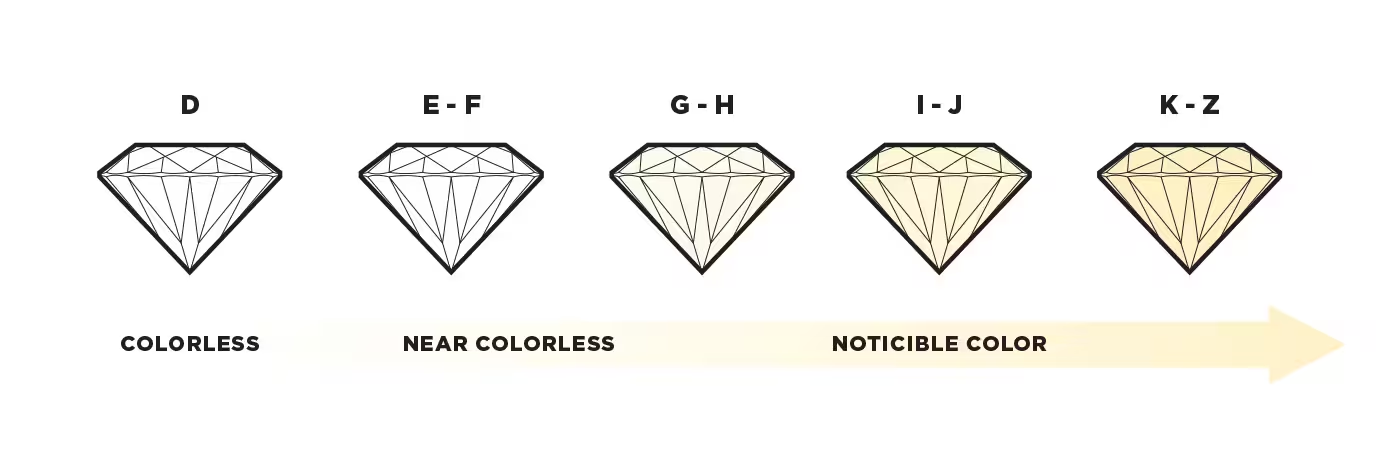
For classic white diamonds, color refers to how much warm tone (a yellowish tint) the diamond has. The more colorless, the rarer and generally more expensive.
Color is graded on a standard scale:
D–F: colorless (the whitest and most expensive)
G–J: near colorless (very popular because the price-to-appearance ratio is often best)
K–M: noticeably warmer tone (some people love this “champagne” vibe)
N–Z: clearly warm tone
Important: “color” is not the same as diamond shape or fluorescence. Those are separate characteristics.
Is “D” Always the Best?
Technically, D is the most colorless. But the best choice depends on what you want to achieve.
Why D isn’t always the right choice:
The premium for D–F can be large, while the visible difference compared to G/H can be small (especially with a well-cut diamond).
If the ring is in yellow gold, an ultra-white stone can sometimes look “contrasty,” while a slightly warmer tone can blend more harmoniously.
A simple idea: you pay the most for color when you choose the most colorless grades. For many people, it’s smarter to choose “near colorless” and put the budget into cut or carat instead.
Metal Matters: White Gold vs Yellow Gold
White gold (and “white metals” in general)
In white metal, everything reflects “cooler” next to the diamond—so a warm tint can be easier to notice.
Practical range:
Very safe: D–H
Smart-buy sweet spot: G–H
Yellow or rose gold
Warm metal softens the tone next to the stone and can “blend away” some yellowness. Many people can choose a warmer color grade in yellow gold at a better price—without the warmth feeling distracting.
Practical range:
Very popular: F–J
Smart-buy sweet spot: H–J (depending on your eye and style)
What Do You Actually See with the Naked Eye?
Most people notice color:
mainly from the side (in profile), not from the top,
when the stone is very large
or when the cut is average and the stone can be compared directly next to a D-color diamond
That’s why cut is so important: a good cut increases light return and can make a diamond look whiter—even if the color grade is lower.
Color vs “Fancy Color” Diamonds
The standard D–Z scale applies to white diamonds. If a diamond is truly colored (pink, blue, yellow, etc.), it’s called a “fancy color.” The logic is different there: color is a virtue, not a flaw.
If you’re looking for a classic engagement ring, most choices usually stay within the D–J range.
How to Make a Confident Choice
If you want the stone to look “white”:
Choose the metal (white vs yellow)
Set your priority: do you want a larger carat, or a more “icy” tone?
My practical recommendations
White gold: start targeting D–H (very good value)
Yellow/rose gold: start targeting H–J (often the best price-to-effect ratio)
If the budget is tight: don’t sacrifice cut—rather choose a slightly warmer color and keep the cut very good.
Summary
Diamond color matters—but not as much as it first seems. For many engagement rings, the smartest choice isn’t the “coldest” D, but a well-cut diamond in a sensible color range that matches the metal tone.
What Is Diamond “Clarity”?
If you’re looking for a diamond engagement ring, you’ll inevitably run into the 4Cs. Carat refers to size (weight), color refers to the diamond’s tone, cut shows how brilliantly the diamond sparkles… and then there’s clarity—meaning the diamond’s clarity/cleanliness.
Clarity is one of the most misunderstood topics, because on paper it seems like “the cleanest = the best.” In reality, for an engagement ring it’s often smarter to aim for an eye-clean diamond: a stone that looks clean to the naked eye.
Quick Summary
Clarity shows how many internal and external “marks” a diamond has.
Most diamonds are not perfect—and that’s normal.
The practical goal when choosing a stone for an engagement ring is eye-clean (clean to the naked eye).
Very often the best price-to-quality balance is VS2 – SI1 (depending on shape and the stone’s characteristics).
For step cuts like emerald/asscher, clarity matters more than for round/oval diamonds.
What Is Clarity?
A diamond’s clarity describes its internal and external features, commonly called “inclusions” and “blemishes.”
Inclusions: features inside the diamond (e.g., tiny crystals, lines, particles)
Blemishes: small surface features (e.g., scratches, dots, surface marks)
These form during the diamond’s growth in nature or during the growth process (lab-grown diamonds can have them too). A clarity grade is not about “is the diamond real,” but “how clean is this specific stone.”
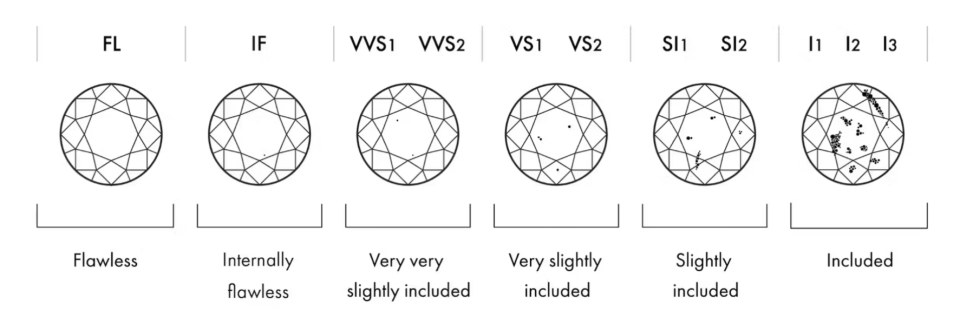
The Clarity Scale (Simple and Clear)
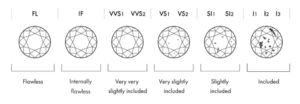
Certificates usually use a grading sequence like this:
FL (Flawless): no inclusions or blemishes visible under 10x magnification
IF (Internally Flawless): no internal inclusions; only tiny surface marks
VVS1 / VVS2: very, very small inclusions—hard to see even at 10x
VS1 / VS2: very small inclusions—visible at 10x, usually eye-clean
SI1 / SI2: small inclusions—more visible at 10x; SI1 is often eye-clean, SI2 depends on the stone
I1 / I2 / I3: inclusions often visible to the naked eye and may affect beauty or durability
If you want a simple rule:
FL–VVS is “perfect,” VS–SI is a smart choice, and I depends on what the wearer wants.
What Does “Eye-Clean” Mean—and Why Is It the Smartest Target?
Eye-clean means: no visible flaws in normal lighting when viewed with the naked eye.
In real engagement-ring life:
no one looks at a diamond with a loupe
people see sparkle and the overall impression
and if the stone looks clean, it looks luxurious
That’s why with FL/VVS you’re often paying for microscopic perfection. An eye-clean stone (VS2 or a good SI1) can look identical in practice—while offering much better value.
Does Clarity Affect Sparkle?
Yes—but not always in the way people assume.
Small inclusions in the VS/SI range typically don’t affect sparkle if the cut is good.
Very large or poorly placed inclusions can:
reduce transparency
create haziness
or disrupt light performance
But in practice, for an engagement ring the priority usually is:
Cut
Clarity (eye-clean in real life)
Color
Carat
Which Inclusions Are “Okay,” and Which Are Better to Avoid?
It all depends on location, size, and type.
Often okay (especially if small and near the edge)
tiny crystals near the edge
small “needle” lines
tiny dots that aren’t in the center
Usually worse (especially if large and centered)
large feathers that reach the edge (can affect durability)
a large black carbon spot in the center (noticeable)
a large cloud (haziness) that makes the stone look dull
inclusions right under the surface (the most visible area)
If a stone is SI1 or SI2, what really matters is what type of inclusion it is and where it sits.
Shape Matters: Not All Cuts Show Clarity the Same Way
Round / oval / cushion: hide inclusions better (the sparkle pattern masks them)
Emerald / asscher: can show inclusions more clearly because the facets are broader
That’s why with an emerald-cut diamond, it can be smart to go a bit higher in clarity than you would for a round.
Practical Recommendations (What I Would Do)
If you want a classic, beautiful choice on a sensible budget:
Round / oval / cushion: aim for VS2 – SI1 (eye-clean)
Emerald / asscher: often aim for VS1 – VS2 (so it looks clean)
If the budget is tight: choose a better cut and keep clarity wisely at an eye-clean level
How to Choose Clarity Safely If You Can’t See the Stone?
Ask for the certificate and the inclusion plot (where the inclusions are)
Ask for a video of the stone (good light, rotating)
Ask the seller directly: “Is this stone eye-clean?” and ask them to explain under what angle and lighting
If possible: view it in daylight and indoor light
Summary
Clarity is the diamond’s internal and external features—part of the diamond’s story. But with an engagement ring, the goal isn’t to pay for a microscope. The goal is that the stone looks genuinely beautiful and clean.
If you want a smart, confident choice:
choose a better cut,
aim for eye-clean clarity
What Is a Diamond’s “Cut”?
When we talk about choosing a diamond engagement ring, most people ask about carat first. But if your goal is a truly sparkling diamond, the most important “C” is actually Cut.
Cut is what determines:
how much light the diamond reflects back,
what kind of sparkle and scintillation you see,
and whether the diamond looks bright—or rather dull.
In this article I’ll explain what diamond cut is, the differences between cut grades, what to check on a certificate, and how to make a smart choice for an engagement ring.
Quick Summary
Cut = sparkle.
A well-cut diamond can look larger and brighter than a poorly cut stone of the same carat weight.
Keefirivunts recommendation: choose Excellent/Ideal, or at minimum Very Good (depending on budget).
Cut ≠ shape. Shape is round, oval, emerald, etc. Cut tells you how well that stone has been proportioned and finished.
What Is a Diamond’s Cut?
Diamond cut refers to the diamond’s proportions, symmetry, and polish—in other words, how the stone has been fashioned so light moves through it correctly.
A well-cut diamond:
allows light to enter,
reflects it back at the right angles,
and creates maximum brilliance and sparkle.
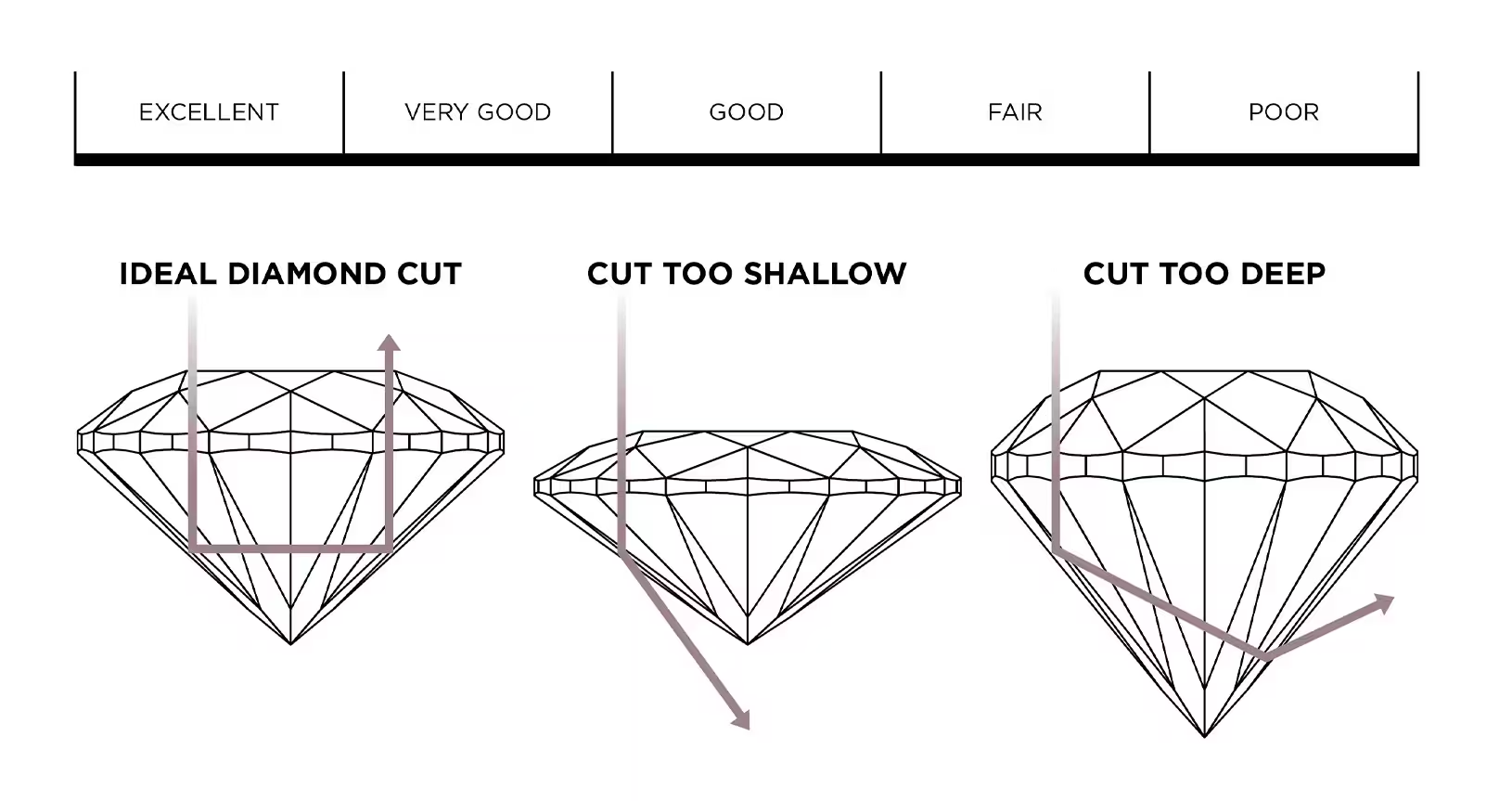
A poorly cut diamond can leak light “out the sides” or “out the bottom,” and therefore look dull—even if it’s large and has high clarity.
Cut Grades (What You’ll See on a Certificate)
On most grading reports, the cut for round brilliant diamonds is typically graded on a scale like this:
Ideal / Excellent
The highest grade. Maximum brilliance and light return.
In practice: if you want the diamond to “come alive,” this is the safest choice.
Very Good
A very strong option—often nearly the same visual effect as Excellent, but sometimes a bit more budget-friendly.
Good
Already a compromise: the diamond can still be pretty, but sparkle and “fire” may be noticeably more subdued.
Fair / Poor
Keefirivunts does not recommend (and does not offer) diamonds graded Fair or Poor, because that’s where the “why doesn’t it sparkle?” problem often starts.
Why Is Cut So Important for an Engagement Ring?
An engagement ring is jewelry you look at up close—every day. When the cut is strong:
the diamond looks more “expensive,”
sparkle shows up both in daylight and indoor light,
and the stone can even look visually larger.
Simple rule: Cut is what makes a diamond feel like a diamond.
Diamond Anatomy (Simple, So You Can Read a Certificate)
On certificates and in diamond descriptions you’ll often see these terms:
Table – the largest top facet of the diamond
Crown – the upper part from the girdle to the table
Girdle – where the crown and pavilion meet (the diamond’s perimeter)
Pavilion – the lower part from the girdle down to the culet
Culet – the very bottom “point,” ideally not visible to the naked eye
Depth – the diamond’s height (table → culet)
Diameter – diameter from one girdle edge to the other (especially important for round diamonds)
These proportions directly affect whether light:
returns to your eye,
or “leaks away.”
PS: Cut and Shape Are Not the Same Thing
This often causes confusion.
Shape: round, oval, emerald cut, cushion, pear, etc.
Cut quality: how well that shape has been cut and finished
For example: “oval” is a shape, but an oval can be beautifully cut—or poorly cut.
How Does Cut Affect Diamond Price?
A great cut costs more because:
it requires more skill,
often more rough material is sacrificed during cutting,
and top-cut stones are less common.
But this is the place where your money is truly “visible”:
a stone of the same carat can feel luxurious in Excellent cut,
but look “cheap” or dull in a weaker cut.
If you have to choose, it’s better to go:
slightly smaller carat + Excellent cut
than
larger carat + average cut.
How to Make a Confident Choice (A Small Checklist)
If you’re choosing a diamond based on the certificate:
Choose cut: Excellent/Ideal (or Very Good if budget requires)
Also check:
Polish – Very Good / Excellent
Symmetry – Very Good / Excellent
Always ask for a video of the stone or view it in different lighting (if possible)
Summary
A diamond’s cut is one of the most important factors when choosing an engagement ring. Cut determines whether the diamond:
sparkles,
scintillates,
and looks truly luxurious.
If you’d like to order your engagement ring from Keefirivunts, feel free to reach out—we’ll help you find a diamond that fits your budget, style, and values.
Can an Engagement Ring Be Resized Later?
Choosing an engagement ring is a big step—it symbolizes commitment and love. And it’s completely logical to feel nervous about the size: “But what if I choose the wrong size… can it be changed later?”
On top of that, a lot can change over time: your body, hormones, training, pregnancy, seasons—and with that, finger size can change too.
Good news: yes, in most cases an engagement ring can be resized later.
But it depends on the ring’s construction, the stone setting, and the material.
Quick Summary
Most classic engagement rings can be made either larger or smaller.
Small adjustments (for example ~half a size) can sometimes be done by stretching, but often the ring still needs to be cut and material added/removed.
Complex designs (stones all around, special constructions, certain patterns) may have limitations.
After resizing, white gold may need re-rhodium plating so the color looks even.
Why Is This Such a Big Topic?
In the past, many couples chose the engagement ring together before the proposal—so the size was usually correct. Today, more people do surprise proposals, which is romantic, but it also means the size isn’t always perfect. And that’s completely okay, because in most cases the size can be adjusted.
How Is an Engagement Ring Resized?
1) Consult a jeweler
The first step is always the same: contact a goldsmith or jeweler who will assess:
how much it needs to be changed
whether the design allows resizing
whether stones need to be removed and re-set
whether surface finishing is needed afterward (for example rhodium plating)
2) Resizing by stretching (small adjustment)
In some cases, a ring can be stretched slightly larger without adding material.
This often works when:
the band is a simple plain ring
there are no stones all the way around the ring
the change needed is small (often around half a size, depending on construction)
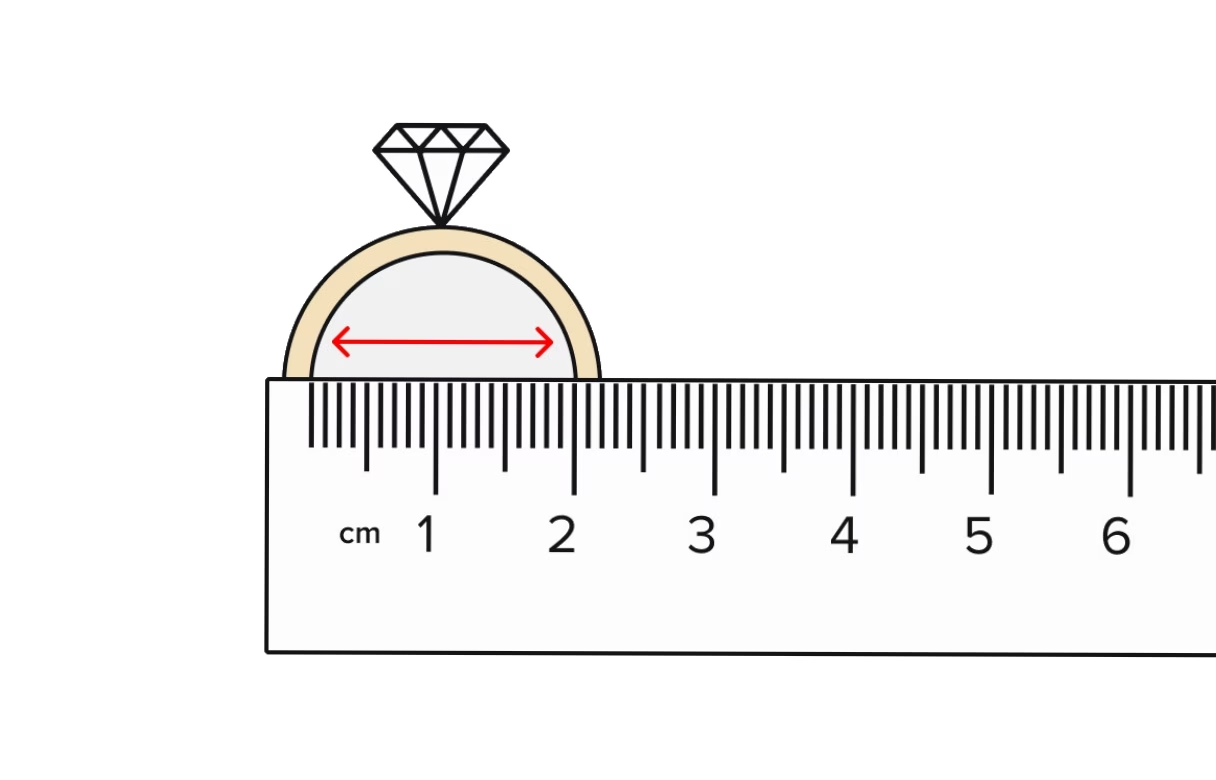
For example, if you want to change from 16 mm to 16.5 mm, stretching may be possible.
3) Resizing by cutting the band (bigger change / making it smaller)
If you need to:
make the ring smaller, or
make the ring larger than a small stretch would allow,
then the band is cut and:
material is removed (to make it smaller)
material is added (to make it larger)
then it’s soldered back together and finished so the ring looks seamless
Sometimes this also means stones must be removed temporarily and re-set—especially if stones are close to the cut point or the construction is delicate.
4) Laser welding (safer for rings with stones)
The logic is similar to traditional soldering, but the big advantage is that the heat is very localized.
This is often the best option when:
the ring has gemstones
the design is delicate
you want to minimize heat impact on the stones and the rest of the ring
5) Rhodium plating and finishing after resizing
If the ring is:
white gold and rhodium plated, it usually needs to be re-plated so that:
the tone is even
the surface looks fresh and bright
(With yellow/rose gold, finishing and polishing are also typically done after resizing so the solder line isn’t visible.)
Is It Always Possible?
Most of the time, yes—but there are exceptions and limitations.
Usually easier to resize when:
the design is classic (one center stone)
the band is plain and doesn’t have stones around it
the metal is gold (585/750)
Limitations can happen when:
stones go all the way around the ring (full eternity)
the design has a complex pattern or engraving that must stay exactly the same
the construction is very delicate or an unusual shape
a very large size change would throw off proportions (stone position, setting angle, shank balance)
That’s why the best approach is always: a jeweler looks at the specific ring and tells you exactly what’s safe.
Final Thought
Ring size shouldn’t stop you from buying an engagement ring. Most engagement rings can be adjusted later—and if the goal is a surprise, it’s completely normal to fine-tune the size afterward. Our general recommendation: when in doubt, choose a slightly larger size—then the ring will fit at the most important moment!
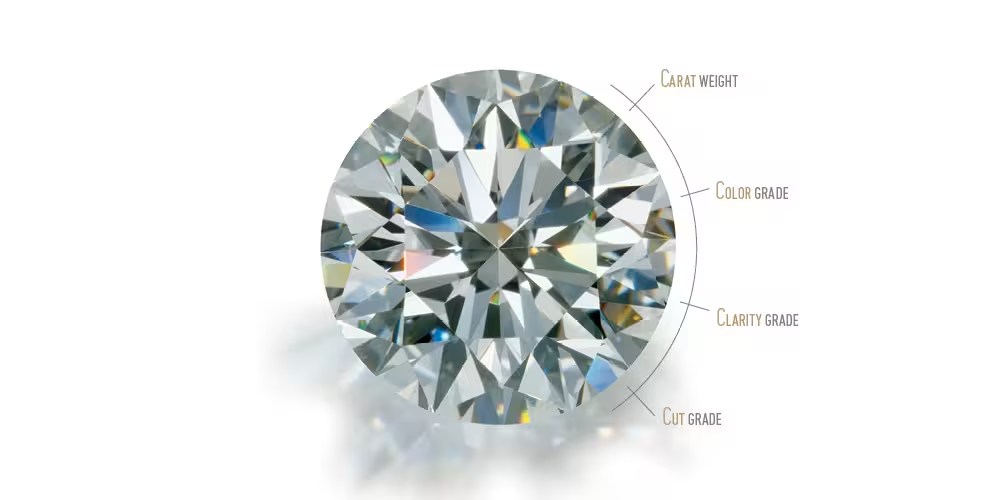
Diamonds and the 4Cs: How to Choose the Right Stone
Whether we’re talking about a lab-grown diamond or a natural diamond, one concept always comes up in the diamond world: the 4Cs. These are the four main factors used to evaluate a diamond’s quality, appearance, and overall value:
Carat (carat weight)
Cut (cut / finish)
Color (color grade)
Clarity (clarity)
When you understand the 4Cs, you can make a smart choice even if you can’t see every stone in person—because these grades are always listed on the certificate.
Quick Summary
Cut is the most important, because it determines sparkle.
Carat is size (weight), but on its own it doesn’t tell you anything about beauty.
Color and Clarity should be chosen so the diamond looks “eye-clean” and matches the metal tone.
A good formula: Cut first → then eye-clean clarity → then the right color → only then carat.
What Are the 4Cs?
1) Carat – size (weight)
Carat is the unit used to measure a diamond’s weight.
1 carat = 0.2 g (200 mg)
The higher the carat weight, the rarer and generally more expensive the diamond—but here’s an important nuance: carat does not directly determine sparkle. A sparkling diamond isn’t a big diamond—it’s a very well-cut diamond.
Fun fact:
The word carat is linked to carob tree (carob) seeds, which were historically used as a reference weight because their mass was considered consistent.
Practical tip:
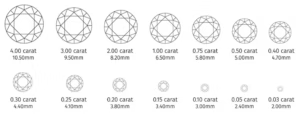
Two stones with the same carat weight can look different in size because:
cut and proportions vary
shape changes the face-up look (oval/pear/marquise often look larger)
2) Cut – the king of sparkle
Cut is what determines how well a diamond reflects light back. Even a very clean and colorless diamond can look “dull” if the cut is average.
When grading cut, the main things evaluated are:
proportions (height, table, depth, etc.)
symmetry
polish quality
What should you choose for an engagement ring?
If you can: Excellent / Ideal (depending on the grading lab)
If you need to save somewhere, then don’t save on cut—it’s the most visibly noticeable diamond feature.
3) Color – how colorless the diamond is
Color refers to the level of yellow tint in a diamond. The classic scale runs from:
D = completely colorless
to Z = noticeably yellowish/brownish
The less color, the rarer and usually more expensive the stone. But to the naked eye, the difference between “perfect” and “very good” is often surprisingly small—especially if the diamond has a strong cut.
Practical ranges:
White gold: D–H often works beautifully
Yellow/rose gold: F–J can be very sensible, because the warm metal tone “blends” a slightly warmer diamond
Extra note:
Fancy color diamonds (pink, blue, etc.) are a world of their own—these can be extremely rare and very expensive.
4) Clarity – what’s inside the stone (and whether it matters)
Clarity describes a diamond’s internal and external “marks”: inclusions, dots, lines, and more. Most diamonds are not perfectly clean—and that’s normal.
Clarity scale (simplified):
IF = internally flawless
then VVS / VS / SI
down to I1–I3 = more noticeable inclusions
What should you choose for an engagement ring?
For most people, the goal is eye-clean: clean to the naked eye.
Practical recommendation:
often VS2–SI1 is more than enough (depending on shape and the stone itself)
don’t automatically pay for “IF” or “VVS” if you won’t see the difference in everyday life
How to Use the 4Cs in Real Life (A Simple Formula)
If you want your diamond to look “expensive” and alive:
Cut (don’t compromise here)
Clarity (aim for eye-clean)
Color (choose based on the metal)
Carat (choose a size that fits your budget)
Why does this work?
Because sparkle and the “wow” feeling come mostly from cut—plus the diamond looking clean and clear in real life.
Summary
The 4Cs give you a clear framework for choosing a diamond without overpaying and getting the best result. Carat is the most obvious number—but cut is what truly makes a diamond come alive.
