Which Diamond Should You Choose?
24.02.2026 · updated 31.08.2026 · Rauno Oidram
Choosing a diamond is one of those decisions that feels both simple and endlessly detailed at the same time. “I just want a beautiful stone” is a perfectly fine starting point—but if the goal is to find the right diamond for an engagement ring, it helps to know a few key truths. That way you avoid an unnecessarily high price tag, get better sparkle, and choose something that fits your values and budget.
What’s the real difference between natural and lab-grown diamonds, what the 4Cs mean, which shapes work best in engagement rings, and how to make a confident choice that fits you.
Quick Summary (if you’re in a hurry)
- A lab-grown diamond is a real diamond — chemically, physically, and optically the same.
- Cut is the most important, because it determines sparkle.
- For color and clarity, aim for eye-clean and a range that matches the metal.
- Carat is the visible number, but proportions and shape can create a bigger overall look even at a lower weight.
- Always ask for a certificate.
Lab-grown vs natural diamond: what’s the real difference?
Let’s start with the most important question, because it always comes up: is a lab-grown diamond a “real” diamond?
Yes. Chemically, physically, and optically, it is a diamond.
What is a natural diamond?
A natural diamond formed deep in the earth under intense pressure and heat, and over time made its way closer to the surface. For many people, that natural origin is part of the romance.
Pros
- Traditional choice, historically preferred, and natural
- In some cases, better resale market
Cons
- Often more expensive than a lab-grown diamond with the same specs
- Origin and supply chain transparency can vary
What is a lab-grown diamond?
A lab-grown diamond is created in controlled conditions using a process that mimics natural diamond formation. The result is a diamond that is like a natural diamond—because it is a diamond.
Pros
- With the same budget, you often get a larger or higher-quality diamond compared to natural stones
- Generally easier to achieve consistent quality and clearer origin
Cons
- Market pricing is more dynamic (price trends can change more over time)
- Not naturally formed
Which one is better?
“Better” depends on what matters most to you.
- Maximum value for your budget → lab-grown diamond
- Tradition and natural origin → natural diamond
- A conscious choice → both can work, but check the certificate and origin info

Diamond 4Cs: what they really mean (and what’s worth paying for)
In the diamond world you’ll hear the 4Cs: Cut, Color, Clarity, Carat. For an engagement ring diamond, one of these matters more than the others.
1) Cut (the most important for sparkle)
Cut determines how well the diamond reflects light and how brilliant it looks. Even a large and clean diamond can look dull if the cut is poor.
Recommendation for an engagement ring
- Choose Excellent / Ideal if possible (depending on the grading lab)
- If you need to save somewhere, don’t save on cut
2) Color
Color (typically D–Z) shows how colorless the diamond is. To the naked eye, differences between many ranges are surprisingly small—especially depending on the metal.
Practical ranges
- White gold: often D–H works very well
- Gold: you can go warmer, for example F–J, because the metal blends the tone
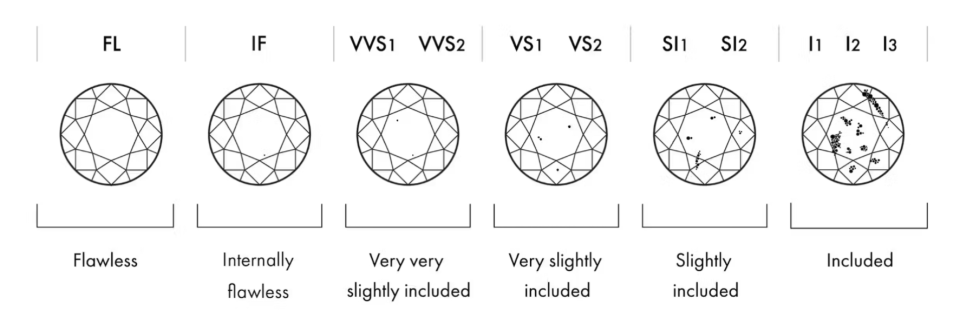
3) Clarity
Clarity refers to internal “features” and tiny marks. Most people want an eye-clean result: clean to the naked eye.
Recommendation
- For many engagement rings, VS2–SI1 is absolutely enough (depending on cut and shape)
- Don’t blindly pay for “the cleanest” if the difference is only visible under a microscope
4) Carat (weight / size)
Carat is what everyone asks about, but it’s not the whole story. Two diamonds with the same carat can look different in size depending on cut and proportions.
Tip: how to get a visually larger diamond at the same carat
- If you want a larger look without pushing the budget, play with shape and proportions (for example oval, pear).

Which shape should you choose? Popular diamond shapes for engagement rings
Diamond shape affects both style and how the stone looks on the hand.
- Round (brilliant): the most classic and typically the maximum sparkle. Often also the most expensive per carat.
- Oval: looks larger on the finger and visually elongates the hand.
- Cushion: soft, romantic, a bit of a vintage vibe. Sparkles “softer” than round.
- Emerald: minimalist and architectural. Shows clarity and color more clearly, so choose those more carefully.
- Princess: sharper and modern with strong sparkle, but corners need a protective setting.
Certificate: what you must pay attention to
When choosing a diamond (natural or lab-grown), always ask for a certificate. The certificate is the diamond’s passport: it lists the 4Cs—cut, color, clarity, carat, measurements, and other details.
What to check
- The certificate and certificate number
- Cut grade and proportions
- Measurements (not only carat)
How to choose a diamond on a budget (without compromising the result)
If your budget is limited (totally normal), choose in a way that keeps the sparkle:
- Cut first
- Choose eye-clean clarity
- Choose color to match the metal
- Only then adjust carat
Simple strategy:
choose slightly lower color/clarity, but a very strong cut—the result will be bright and beautiful.
Lab-grown diamond in an engagement ring: who is it best for?
Especially good if:
- you want a larger stone with the same budget
- you want maximum sparkle and quality
- you value a modern and transparent choice
A natural diamond is especially good if:
- tradition and natural origin matter to you
- you value the classic choice
Frequently asked questions
Does a lab-grown diamond sparkle less?
No. With the same grades, it’s impossible to tell natural and lab-grown diamonds apart with the naked eye.
Is a natural diamond always a better investment?
A diamond is not a “quick investment.” An engagement ring is primarily an emotional and personal item. If investment matters to you, you need to look at specific stone categories and market conditions—not only natural vs lab.
What matters most for a ring to look expensive?
A great cut, the right proportions, a clean design, and a setting that lets light work with the stone.
Summary: which diamond should you choose?
If you want a simple decision:
- maximum sparkle and value for your budget → choose a lab-grown diamond and focus on cut
- tradition and natural origin → choose a natural diamond, and still focus on cut
- either way: Cut is king (cut determines whether the diamond sparkles)
Read next: Diamonds and the 4Cs · Diamonds and the 4Cs: How to Choose the Right Stone · Lab-Grown vs Natural Diamond: An Honest Comparison
Frequently asked
Which diamond is the best choice for an engagement ring?
For most people the best balance is a good cut, colour G–H and clarity VS. Cut affects the sparkle most — that is the one not to economise on; colour and clarity are where you can.
Is a bigger stone always better?
No. A large stone with a poor cut looks lifeless next to a smaller, well-cut one. For the same budget a lab-grown stone buys two to three times the size of a natural one.
Are all your diamonds certified?
Every stone above 0.3 carats carries a GIA or IGI certificate, which you receive with the ring. The certificate also states the stone's origin.

Rauno Oidram — goldsmith, Keefirivunts
Designs the Keefirivunts rings and personally chooses every stone.