Blood Diamonds: What They Are—and How to Make a More Ethical Diamond Choice
24.02.2026 · updated 31.08.2026 · Rauno Oidram
You’ve probably heard the term “blood diamonds” (also called conflict diamonds). Many people ask: are these literally “bloody” or red-colored diamonds?
No. They are not called that because of their color. In most cases, they look like completely normal diamonds. The name comes from the fact that parts of diamond mining and trade have historically (and in some places even today) been linked to funding armed conflicts and to severe human rights abuses.
The goal of this article is not to accuse anyone or to “ruin” an existing piece of jewelry. On the contrary: the more we understand the topic, the better choices we can make.
Quick Summary
- A blood diamond generally refers to diamonds whose sale is connected to financing conflicts.
- The Kimberley Process (KP/KPCS) was created to reduce this problem, but its definition is narrow and does not cover all human-rights issues.
- If you want a more ethical choice: ask for documentation, prefer transparent supply chains, and consider lab-grown diamonds or other alternatives.
What Are “Blood Diamonds,” and Why Did This Topic Become a Big Issue?
The concept of blood diamonds (or conflict diamonds) became widely known because diamonds have been used to finance armed conflicts—diamonds are small, valuable, and easy to transport.
Historically, the issue has been especially visible in certain regions where armed groups or corrupt networks have used mined stones to generate income and purchase weapons.
An important nuance: today, the question is not only whether a stone funded rebels, but often more broadly about supply chain transparency, working conditions, and human rights. This bigger picture is why some organizations consider existing mechanisms insufficient.

The Kimberley Process: What Is It, and What Does It Actually Cover?
One of the best-known systems created to fight blood diamonds is the Kimberley Process Certification Scheme (KPCS), launched in 2003. Its goal is to limit the movement of conflict diamonds in international trade.
Here’s the key detail: the KP definition of “conflict diamonds” mainly focuses on rough diamonds used by rebels (or their allies) to fund conflict, with the aim of undermining legitimate governments.
Why isn’t that always enough?
The KP/KPCS has been criticized because:
- its definition is narrow (it doesn’t cover all human-rights abuses, especially when the situation doesn’t fit the “rebels vs government” framework)
- the system relies heavily on internal country controls, and in practice there can be gaps
This doesn’t mean the KP is useless—rather it means the KP shouldn’t be the only thing you rely on when making an ethical choice.
How to Better Avoid Blood Diamonds (and Unethical Supply Chains in General)
The reality is that it’s hard to promise a 100% guarantee when the supply chain is long and a stone has changed owners/countries multiple times. But there are absolutely choices that reduce risk and increase transparency.
1) Ask for documents and origin information
- diamond certificate + certificate number
- the seller’s explanation of which channel the stone comes from
- if they claim “conflict-free,” ask what that means in their case (KP? another standard?)
2) Prefer companies with broader responsibility standards
For example, the Responsible Jewellery Council (RJC) Code of Practices aims to improve responsible practices across the jewelry supply chain (including human rights and environmental topics). For RJC members, COP certification follows an auditing-based approach.
3) Consider a lab-grown diamond
A lab-grown diamond:
- avoids conflict risks associated with mining
- is still a real diamond
- is often more affordable (with the same budget you can get better quality and/or a larger stone)
If your goal is maximum transparency + value for your budget, it can be a great option.
4) Alternatives: vintage/recycled and moissanite
- Vintage/recycled (already in circulation) stones and jewelry can be an ethically simpler choice because you’re not supporting new mining.
- Moissanite is a popular alternative and often offers a very strong price-to-performance ratio.
If You Already Have a Natural Diamond, Should You Worry?
You don’t need to feel guilty. Many people received their ring as a gift, an inheritance, or bought it at a time when they didn’t know about this topic. The most sensible and respectful approach is:
- value your jewelry and wear it
- take good care of it and have the settings checked from time to time
- if you ever choose a new stone/piece in the future, you’ll choose more consciously
Movie Recommendation (If You Want More Emotional Context)
A feature film connected to this topic is “Blood Diamond” (2006)

Summary
“Blood diamonds” are not red diamonds—they are stones whose supply chain may be linked to conflicts and serious ethical problems. The Kimberley Process helped historically reduce the issue, but its framework is narrow, and today there is growing focus on broader responsibility and transparency.
If you want to make a conscious choice:
- ask for documents
- prefer transparent supply chains and strong standards
- consider lab-grown diamonds or alternatives
Read next: Origin and ethics · Where diamonds and gold actually come from — the certificates that mean something · Lab-Grown vs Natural Diamond: An Honest Comparison
Frequently asked
What are blood diamonds?
Conflict diamonds are stones whose sale has financed armed conflict. The Kimberley Process limits their reaching the market, but the only complete certainty comes from a stone's documented origin.
How can I be sure my diamond is ethical?
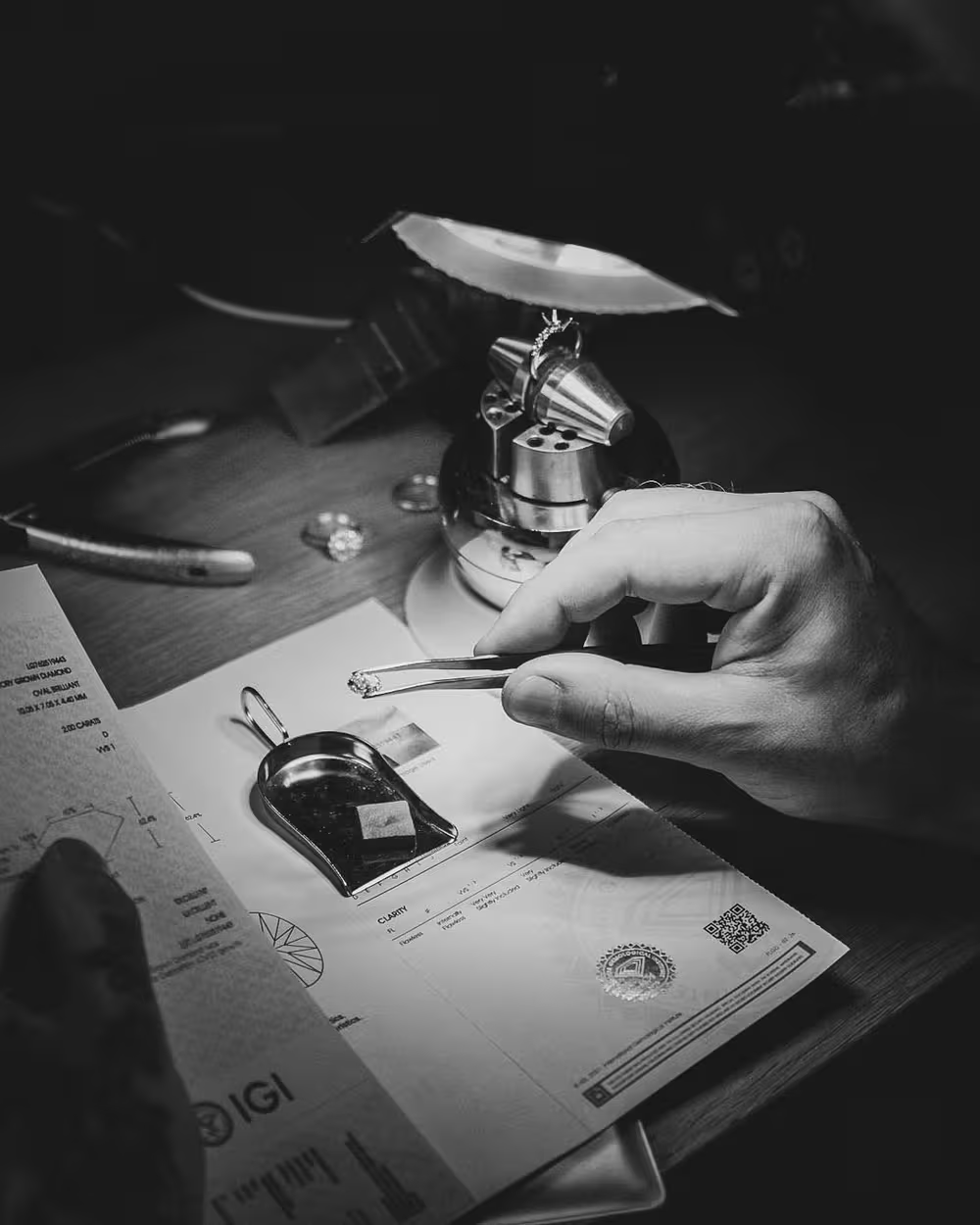
Ask for a certificate that states the origin. With a lab-grown stone the question is simplest — its birthplace is a documented facility. Every stone we sell above 0.3 carats carries a GIA or IGI certificate.
Does recycled gold matter as much as the stone's origin?
Both matter. Mining gold is harder on the environment than most people assume, which is why we work in recycled 585 gold and stones with documented origin.

Rauno Oidram — goldsmith, Keefirivunts
Designs the Keefirivunts rings and personally chooses every stone.